|   | Ahla w sahla. It's Friday, which means your brain deserves a little peace — but Lebanon's not quite there yet: a bishop is heading to Washington with an inconvenient truth about what peace actually costs, the Lebanon-Israel agreement is showing cracks six weeks in, and a spy network prosecution just expanded to 14 charged individuals. Let's get into it. |
|
| | A Bishop Goes to Washington — With a Warning About What Peace Actually RequiresA Syriac Catholic bishop who spent the war visiting displaced families in South Lebanon is heading to Washington this week to tell American policymakers something they may not want to hear: military force can eliminate an immediate threat, but it can also plant the seeds of the next conflict. His argument, published in Newsweek, is that lasting peace requires the Lebanese state to offer its citizens something real — security, jobs, schools — or armed groups will keep filling the void.
- Bishop Jules Boutros argues that Hezbollah built influence not only through weapons but through schools, healthcare, salaries, and social assistance — and that dismantling it requires the state to replace those services, not just the guns.
- He warns that Christians have also been displaced from the South, and that their communities have been shrinking for decades, making a viable Lebanese state even harder to rebuild.
- His core message to Washington: stop asking whether the next military operation will win, and start asking what kind of country it will help build in five or ten years.
Why it matters: The bishop's framing — that ideology can't be defeated by a missile, only by a more convincing idea — captures a debate Lebanese policymakers and their international backers are actively wrestling with. Lebanon-Israel Agreement Under Strain Six Weeks InPresidential advisor Jean Aziz's essay in Just Security puts into words what many in Beirut are watching nervously: barely six weeks after Lebanon and Israel signed one of the most significant agreements between them in decades, the deal's logic is already buckling under the weight of competing demands and ongoing military operations.
- The latest US-sponsored Rome talks ended without agreement on expanding "experimental areas" from which Israeli forces should withdraw — Israel wants proof of Lebanese Army control first, while Lebanon says the army can't fully deploy where Israeli forces still operate.
- UNIFIL recorded 113 Israeli projectiles in a single day, the highest level since June 21, even as the ceasefire framework was supposed to be winding down hostilities.
- Azize argues the impasse risks handing Hezbollah exactly the narrative it needs: that negotiations failed and armed resistance remains necessary.
- His prescription is a comprehensive disarmament, demobilization, and reintegration process — not a weapons surrender order — paired with full Israeli withdrawal.
Zooming out: The question of sequencing — who moves first, Lebanon or Israel — has become the central fault line in Lebanon's most consequential diplomatic moment in years. Update: Military Prosecutor Formally Charges 14 in Hezbollah-Linked Spy NetworkThe cross-border sabotage network case — which Sobhiye readers have followed since early September — has taken its next formal step. Government Commissioner to the Military Court Judge Claude Ghanem has filed a full indictment, expanding the charged individuals and detailing the specific accusations for the first time.
- Ghanem's indictment covers 14 individuals — 6 detained and 8 at large — up from the 5 members we reported referred for prosecution on Sep. 13, according to Al Modon.
- The charges are serious: forming a criminal group to undermine state authority, committing terrorist acts using explosive devices and drones, smuggling people across the Syrian border, and possessing unlicensed military weapons and detonators.
- The fugitive known as "Hajj Alaa" — identified as a Hezbollah official who provided shelter, financing, and logistical support — remains at large, as do six others charged with terrorism; L'Orient Today notes the network was reportedly run from Russia by a former Syrian regime officer.
- The full file has been referred to First Military Investigative Judge Ghada Abu Alwan for expanded interrogations and formal arrest warrants.
What to watch: Whether Lebanese security forces can locate and detain the eight fugitives — including "Hajj Alaa" — will determine how far this prosecution can actually reach. |
|
as of 2:10 AM GMT · Source: Polymarket |
What do you say when someone sneezes in Lebanese? Scroll to the bottom for the answer — or play all 10 at sobhiye.news/games/trivia |
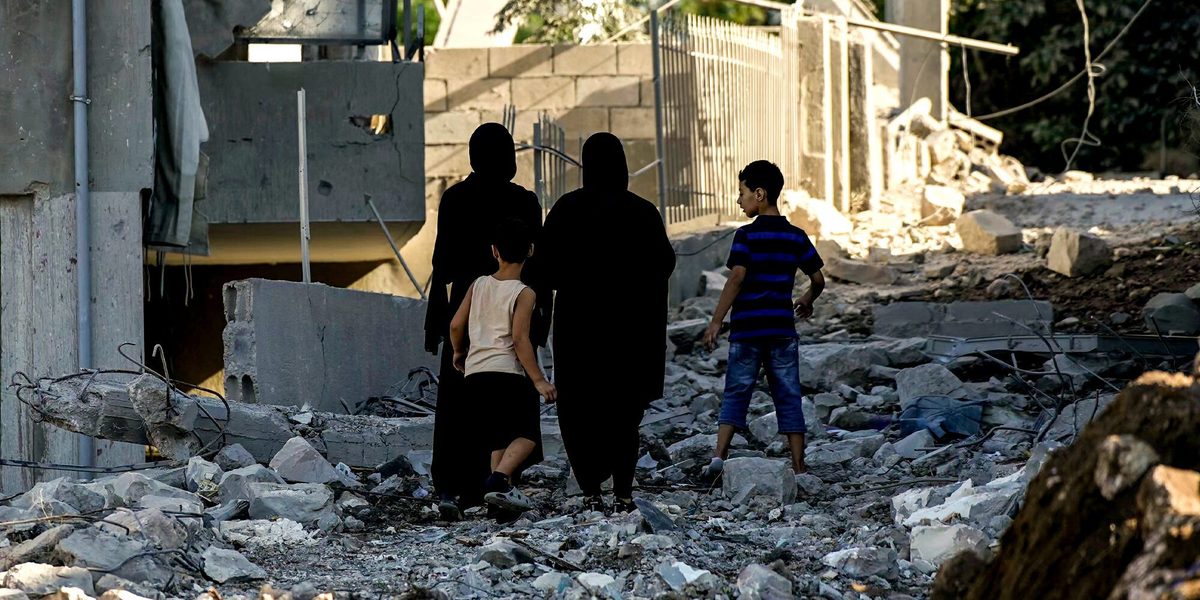
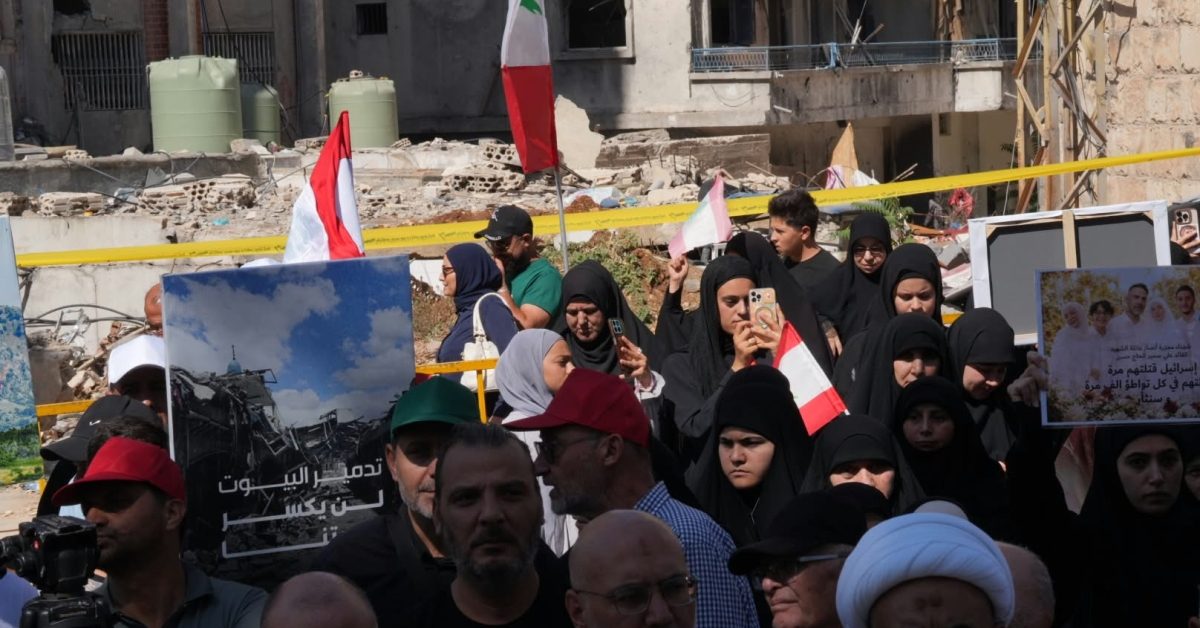
| | - 90% rubble, 0% answers: Since the ceasefire, Israeli explosions have pushed destruction in villages like Yohmor, Arnoun, and Nabatieh al-Fawqa from roughly 30% to over 90%, according to local officials. Residents protested in Nabatieh, demanding Lebanese Army deployment and calling ministerial visits nothing but photo opportunities.
- Shaking more than homes: Lebanon's Environment Minister warned that Israeli explosions near active fault lines — including 1,100 tons detonated at Ali al-Taher, generating waves equivalent to a magnitude 4.2 earthquake — may risk reactivating seismic faults. The government has tasked her with preparing a report for referral to the UN Security Council.
- EDL gets a new boss: Cabinet appointed Nassib Nasr as chairman of Electricité du Liban, keeping Kamal Hayek as general manager. The same session approved civil servant salary increases worth six months' pay, to be split between early and late 2027, and greenlit an investment project in Tripoli's special economic zone.
- The Vatican's Lebanon file: Pope Leo XIV has placed Lebanon inside what sources describe as a broader diplomatic operations room, with Archbishop Gallagher dispatched to press international bodies on Israeli actions there. The Vatican reportedly sees Lebanon's fate as an early indicator of how the wider Middle East will emerge from this turbulent phase.
- Tehran's UNGA passport stamped: Washington has approved visas for Iranian President Pezeshkian and Foreign Minister Araghchi to attend UN General Assembly High-Level Week in New York, even as the US-Iran war grinds into its seventh month — albeit with a scaled-down delegation, tighter travel restrictions, and a ban on luxury goods.
|
|
| ─ | Parallel Rate | 89,550 LBP | 0.00% | | ─ | Official Rate | 89,500 LBP | 0.00% | | ▲ | Gold | $4,389.4 | +0.04% | | ▲ | Bitcoin | $76,672 | +0.26% | | ▲ | S&P 500 | 7,637.76 | +0.69% |
as of 1:52 AM GMT · Source: lbprate, BDL, Yahoo Finance, CoinGecko |
| | Gulf Sovereign Wealth Funds Get a 49.5% Stake in Paramount-Warner Bros.The US Federal Communications Commission has approved a deal that hands sovereign wealth funds from Saudi Arabia, Qatar, and Abu Dhabi a combined 49.5% equity stake in a merged Paramount-Warner Bros. Discovery — the largest foreign stake in American broadcast media ever approved by the regulator.
- The FCC cleared Paramount's petition on the grounds that the three Gulf funds will hold no voting stock, with the Ellison family and RedBird Capital Partners retaining 100% of voting shares in the combined company.
- Paramount owns 28 TV stations, which legally require FCC sign-off for any foreign ownership above 25%.
- The merger remains on hold pending an antitrust suit filed by California and 11 other states, with a trial scheduled for next March.
- Democratic FCC commissioner Anna Gomez called the decision a handover of one of America's biggest media companies to "some of the most repressive governments in the world."
What to watch: Whether the antitrust trial proceeds on schedule next March will determine if the Gulf-backed merger — and the FCC's precedent-setting ruling on foreign media ownership — actually takes effect. Wars, Straits, and the Price of Everything: How Conflict Rewrites Global TradeTwo blocked waterways — the Suez Canal route through the Red Sea and the Strait of Hormuz — have become the defining economic story of 2026, reshaping shipping costs, energy prices, and the price of goods from Beirut to Bangkok.
- By May 2025, cargo volumes through the Suez Canal were about 70% below 2023 levels, forcing ships to reroute around the Cape of Good Hope and driving a historic 6% growth in global "ton-mile" distances covered in 2024.
- The Strait of Hormuz handles about a quarter of the world's seaborne oil trade; disruptions there have pushed Brent crude to roughly $105 a barrel, with about 16 million tons of fertilizers also transiting the strait annually.
- Global goods trade still rose about 4.6% in 2025, but the World Trade Organization expects growth to slow to about 2% in 2026 — and possibly 1.4% if oil and gas prices stay elevated.
The bigger picture: The twin chokepoint disruptions have pushed companies and governments alike to rethink "just-in-time" supply chains in favor of strategic stockpiles, diversified routes, and regional sourcing — a structural shift that will outlast the current conflicts. Saudi Arabia's Nuclear Ambitions: Energy Diversification or Something More?Saudi Arabia is pressing ahead with a peaceful nuclear power programme as part of a broader push to reduce domestic oil and liquid fuel consumption — freeing up more hydrocarbons for export — though key details on capacity, timelines, and uranium enrichment remain publicly unresolved.
- Saudi Aramco's gas strategy aims to increase sales gas production capacity by around 80% by 2030 from 2021 levels, as part of a Liquid Fuel Displacement Programme targeting roughly one million barrels of oil equivalent per day replaced by gas and renewables.
- At the IAEA's 70th General Conference, Saudi Arabia announced around 114 million tonnes of raw material at the Jabal Sayid project in the Medina region, containing rare earth elements and promising uranium concentrations — though no mineable reserve has been established.
- The Additional Protocol granting the IAEA broader site-access powers was not in force in Saudi Arabia as of June 30, 2026.
Zooming out: With the IAEA's director general confirming a planned US-Saudi nuclear cooperation agreement that stops short of requiring Saudi Arabia to sign the Additional Protocol, the scope of international oversight over the Kingdom's uranium activities remains an open question. |
|
| | - Derbakke hits different: Lebanese-American musician Ghady Ibrahim went viral for his derbakke cover of Dua Lipa's "Training Season" — and honestly, it slaps harder than the original. Based in the US, he's given the same treatment to Bruno Mars, Pitbull, and Saint Levant, proving the derbakke belongs absolutely everywhere.
- Beirut on canvas, again: Painter Claude Moufarege — architect and engineer by training — brings her lifelong love letter to Beirut to an Agial Gallery exhibition, where the city's chaotic light, layered stories, and impossible contradictions become the recurring subject of a deeply personal memorial painting. Some homecomings happen on a wall.
- Soprano takes the Silk Road: Lebanese-Armenian soprano Shoghik Torosyan will perform as soloist with the Armenian State Chamber Orchestra on a tour of India and China from September 21 to 30, as part of a concert program marking the 35th anniversary of Armenian independence. Two continents, one Lebanese-Armenian voice.
- Umrah just got easier: Saudi Arabia's Ministry of Hajj and Umrah has launched a multiple-entry Umrah visa and expanded booking through global online platforms, with its Nusuk app now serving more than 51 million users from more than 170 countries — good news for Lebanese families planning the journey.
|
|
Whatever this Friday brings, hold the good parts close — see you back here Monday morning. |
Sa77a (health) is said when someone sneezes, coughs, or finishes eating. |
Lebanon news, every weekday morning. Free, sharp, ~5 minutes. |
|
|
|
|