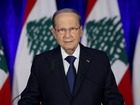
|   | Shou el akhbar — it's Sunday, and that means we're taking a step back to look at the week that was in Lebanon. The biggest story: prosecutors formally requested that former President Michel Aoun be charged over the 2020 Beirut port explosion — a move that could mark a turning point in a case that has dragged on for six years. Meanwhile, Lebanon's south stayed tense, with a peace agreement already showing signs of strain and UNIFIL's future hanging in the balance. Ten stories. One week. Let's get into it. |
|
What did Jean Aziz argue is required before Hezbollah can be disarmed? | | US sanctions on Hezbollah |
| | |
Scroll to the bottom for the answer — or play all 10 at sobhiye.news/games/news-quiz |
| | - Port Blast Charges Loom: Lebanon's Court of Cassation prosecutor on Tuesday requested that Judge Tarek Bitar indict former President Michel Aoun over the 2020 Beirut port explosion, which killed more than 220 people. The request cited Aoun's alleged prior knowledge of ammonium nitrate stored at the port without action. Charges could be issued within weeks.
- Paris Army Summit: French President Macron, Lebanese President Joseph Aoun, and Jordanian King Abdullah II jointly opened a high-level international military meeting in Paris on Thursday, dedicated to supporting the Lebanese army. The "practical and operational" gathering brought senior military officials from France, Britain, Jordan, the United States, Saudi Arabia, and Gulf partners to define the army's deployment needs and capabilities.
- UNIFIL Extension Battle: Lebanon sent a letter to the UN Security Council earlier this month warning that ending UNIFIL's mission on December 31, 2026 would be "premature," as Israeli military operations in the south continued near-daily. France and a majority of Security Council members expressed support for an extension, while Israel objected. Efforts to agree on a replacement force remained unresolved.
- South Lebanon Peace Deadlock: Presidential adviser Jean Aziz published a sharp analysis warning that the Lebanon-Israel agreement, brokered this summer, was already stalling — with a US-mediated Rome round ending without progress on expanding Israeli-controlled "pilot zones." UNIFIL recorded 113 Israeli projectiles in a single day, the highest count since June 21, amid competing demands over withdrawal sequencing.
- Sanctioned Oil Scandal Deepens: New shipping and legal documents published this week tied Lebanon's overpriced Russian fuel imports — allegedly falsified as Egyptian or Turkish — to companies later sanctioned under the UK's February 2026 package targeting the 2Rivers shadow fleet. At least 15 vessels and 8 companies involved in Lebanon's fuel supply chain between 2023 and 2025 were subsequently sanctioned; Lebanese courts opened two additional investigations.
- Banking Law Under Fire: A detailed analysis argued that Lebanon's financial gap bill — referred to Parliament in December 2025 and still under revision — risks becoming a tool to distribute losses onto depositors before investigating those responsible for the collapse. The IMF estimated total financial sector losses at roughly $70 billion as of 2023, with sources spanning Banque du Liban's financial engineering, insider transfers, and subsidies misuse.
- Generator Mafia Exposed: An investigation published Wednesday revealed that private generator rates across Lebanon reached as high as $0.90 per kilowatt-hour in August 2026 — nearly double the Energy Ministry's guideline of $0.54. Operators carved neighborhoods into exclusive "zones," cutting off subscribers who complained, while regional tensions around the Strait of Hormuz gave owners a new pretext to raise prices.
- Land Sales Banned in South: The Lebanese Cabinet last week approved a draft law exceptionally banning real estate transactions in areas currently occupied by Israeli forces in southern Lebanon, then referred it to Parliament. The move aimed to prevent economically pressured landowners — cut off from their property — from being pushed into selling under duress amid the ongoing occupation.
- Assad Network Charged: Military prosecutor Claude Ghanem on Thursday charged 12 people linked to a pro-Assad network dismantled in early September, referring them to the First Military Investigative Judge. The network allegedly smuggled people and weapons across the Lebanese-Syrian border into a Bekaa training camp, reportedly run from Russia by a former Syrian regime officer, with a Hezbollah official overseeing operations on the ground.
- Apple Season Roadmap: Lebanon's Agriculture Ministry announced a seven-track plan this week targeting exports of at least 100,000 tons from an estimated 200,000-ton apple harvest in 2026. The strategy includes diplomatic outreach to Egypt, Saudi Arabia, Jordan, the UAE, and Iraq, presidential engagement with importing nations, and a national promotional campaign to protect farmers and stabilize market prices.
|
|
That's your week in review. Rest up — we'll be back in your inbox tomorrow morning. |
| ✓D. Full Israeli withdrawal |
Azize argued disarming Hezbollah cannot happen without a full Israeli withdrawal from Lebanese territory. Read the full story → |
Lebanon news, every weekday morning. Free, sharp, ~5 minutes. |
|
|
|
|