|   | Ahla w sahla. Lebanon's prime minister stood at the UN podium this morning and said, flatly, that no one else gets to speak for Lebanon — not Iran, not its proxies, not anyone with a different agenda. Meanwhile, Israeli strikes continued in the south and a new essay asks an uncomfortable question: what does it say about Lebanese politics that its biggest debates still revolve around men who've been dead for decades? |
|
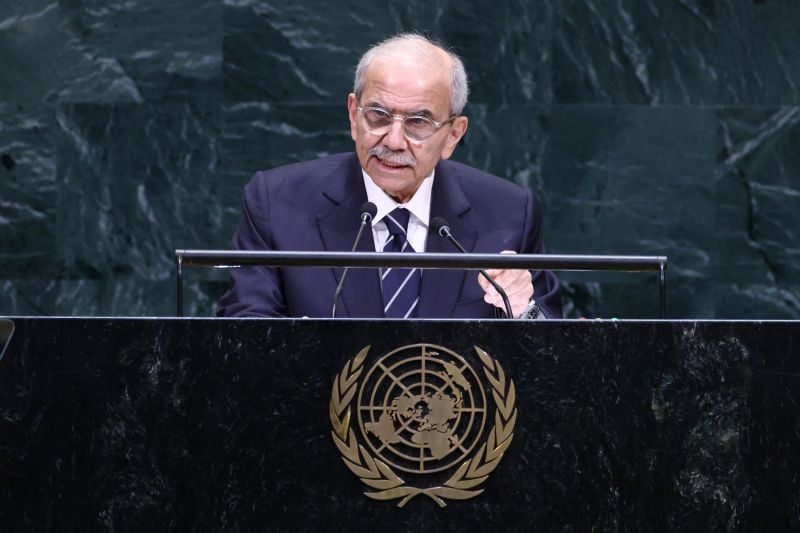
| | At the UN, Salam Declares: Only Lebanon Speaks for LebanonStanding before the UN General Assembly on Friday, Prime Minister Nawaf Salam delivered the clearest articulation yet of his government's core doctrine: the Lebanese state — and no one else — holds the right to make decisions on war, peace, and the country's future. It was a direct message to Iran and its allies, who have pushed for Lebanon's fate to be bundled into US-Iran negotiations.
- "No one speaks in the name of Lebanon and no one negotiates on its behalf except for the Lebanese state," Salam said, demanding Israeli withdrawal to the 1949 armistice line per Resolution 1701 and the release of all detainees.
- On weapons, he was equally firm: cabinet decisions in August, September of last year, and March this year have already enshrined the principle that arms belong exclusively to the state.
- With UNIFIL's mandate expiring at year's end, Salam warned against the "vacuum" a withdrawal without a successor arrangement would create, calling for a new international force to maintain monitoring and liaison functions.
- He also listed active reform projects: revitalizing the civil service, strengthening judicial independence, modernizing media law, abolishing the death penalty, and ongoing IMF negotiations.
Why it matters: Salam's speech sets a public benchmark — the framework agreement must produce "concrete measures" on a "clear timetable," and success will be measured by commitments kept, not intentions declared. Bachir and Nasrallah, Side by Side: The Problem With Political TotemsA few days separate the anniversaries of the assassinations of Bachir Gemayel and Hassan Nasrallah — and a new essay argues that what truly unites them isn't September or violence, but the way Lebanese communities have transformed both men into something beyond criticism: totems.
- Once a leader is called a "martyr," the essay argues, they ascend from historical figure to sacred symbol — shielded from accountability and frozen at the moment of death, unburdened by the consequences of choices they never had to see through.
- The totem doesn't just preserve memory; it actively shapes political behavior decades later, turning inter-community dialogue into a clash of competing mythologies rather than a negotiation of facts.
- The deeper indictment: Lebanese leadership has historically worked to make communities dependent on the leader, not capable of functioning without one — the opposite of what a state-builder does.
The bigger picture: As Lebanon navigates a moment that genuinely demands institution-building over strongman politics, the essay's provocation lands with uncomfortable timing — true loyalty to any leader, it suggests, is measured by how little his community still needs him. US Ambassador: Peace Waits on Hezbollah's Weapons. Israel Keeps Striking Anyway.The June 26 framework agreement between Beirut and Washington was supposed to set a path toward Israeli withdrawal and Lebanese Army deployment in the south. Three months on, Israeli strikes continue across occupied southern Lebanon, and the US Ambassador just made America's condition for peace explicit.
- Ambassador Michel Issa told MTV that "Hezbollah handing over its weapons would pave the way for peace" and that UNIFIL would be unnecessary if both disarmament and Israeli withdrawal happen.
- On the ground Friday, Israeli forces infiltrated the Kfar Shouba area, drove military vehicles through Mansouri, fired artillery toward Haddatha, Haris, and Aita al-Jabal, and set fire to homes on the outskirts of Khiam.
- Israeli press reported a possible "reorganization" of the buffer zone deployment — demobilizing special forces brigades, replacing them with regular units — alongside construction of new fortified positions inside occupied territory.
- One resident of Qlaileh noted an absence of overnight blasts "for the first time since June" — a rare quiet, broken by resumed strikes Friday morning.
What to watch: Whether the reported Israeli troop reorganization signals a genuine reduction in the occupied footprint — or a longer-term consolidation — will define the next phase of framework talks. |
|
as of 2:36 AM GMT · Source: Polymarket |
What was the Silk Road of Lebanon famous for? Scroll to the bottom for the answer — or play all 10 at sobhiye.news/games/trivia |
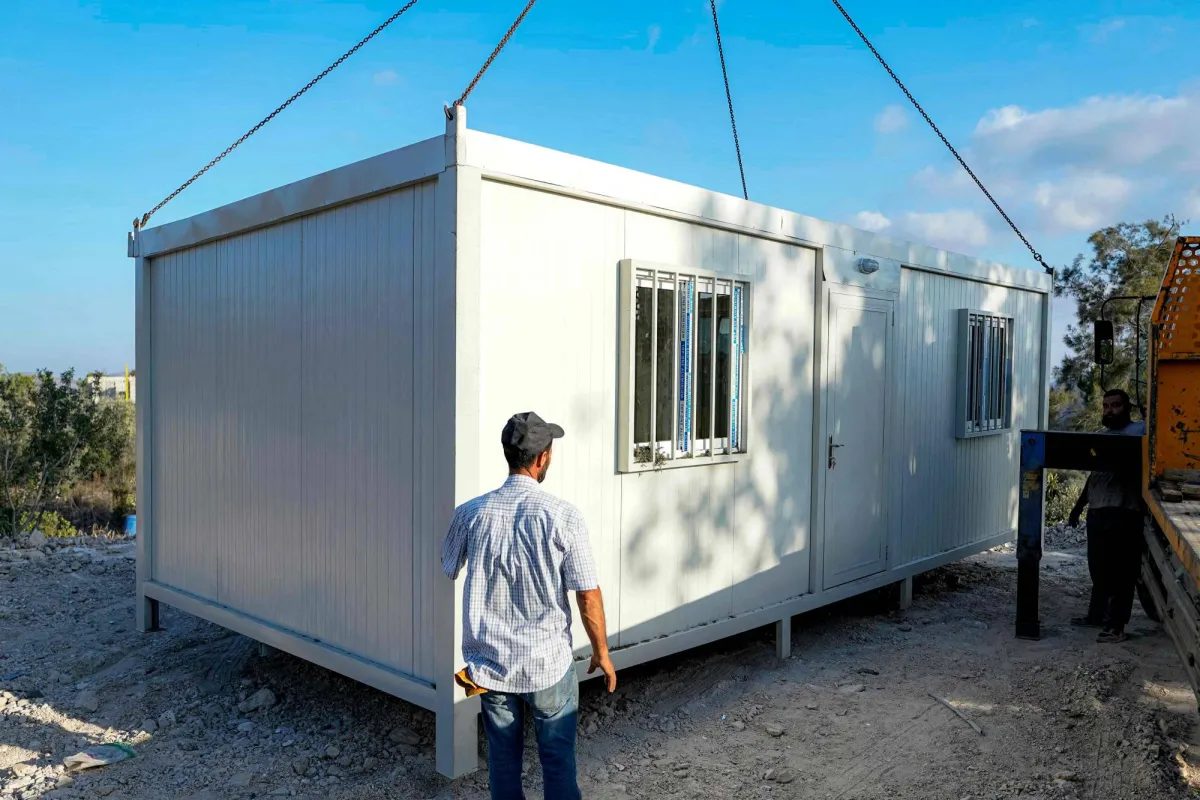
| | - 300,000 homes, zero easy answers: The Council for the South has begun handing over the first batch of prefabricated homes to families in Zawtar al-Gharbiyah — but a High Relief Committee source warned that roughly 300,000 housing units are destroyed or uninhabitable, making prefab shelters one tool, not a solution.
- Gold at the crossroads: Lebanon's gold reserves hit $41 billion as of Aug. 31, 2026, and the debate over whether to liquidate part of them is back — but experts say any move needs an independent sovereign fund, international oversight, and a plan to replenish whatever is sold, or it's just a very shiny band-aid.
- Beirut hosts the region's conscience: President Aoun opened the 12th Regional Red Cross and Red Crescent Conference in Beirut, telling delegates that protecting paramedics is a legal duty, not a choice — and honoring two Lebanese Red Cross members killed during Israeli strikes while performing humanitarian duties.
- Hezbollah's fine print: MP Hassan Fadlallah said Hezbollah and Amal are "not against a political solution" in the south and remain open to indirect negotiations — but rejected what he called "surrender," criticizing the framework agreement as entrenching rather than ending the occupation.
- Eco-hero, age 16: Beirut student Hala Sharafeddine became the first Lebanese winner of the International Young Eco-Hero Award, taking second place for "Code for Earth" — a free virtual program she built that taught 50 girls across the Middle East, North Africa, and South Asia to code and tackle environmental problems.
|
|
| ─ | Parallel Rate | 89,600 LBP | 0.00% | | ─ | Official Rate | 89,500 LBP | 0.00% | | ▲ | Gold | $4,320.5 | +0.52% | | ▼ | Bitcoin | $84,103 | -0.82% | | ▲ | S&P 500 | 7,743.41 | +0.49% |
as of 2:21 AM GMT · Source: lbprate, BDL, Yahoo Finance, CoinGecko |
| | Iran Offers to Reopen Hormuz in Seven Days — With Conditions AttachedIran's foreign minister told international media in New York that Tehran is ready to reopen the Strait of Hormuz within seven days — if the US meets a list of demands that includes a region-wide ceasefire, the release of frozen assets, and an end to the naval blockade. It's the most concrete public offer since the June memorandum of understanding broke down.
- Foreign Minister Abbas Araghchi said the plan calls for a cessation of all hostilities across the Middle East for seven days, including in Lebanon, with Hormuz reopening on day seven.
- The conditions include the release of frozen Iranian assets estimated at at least $12 billion, lifting of sanctions on Iranian oil, and an end to the US naval blockade.
- A Revolutionary Guards spokesman separately told AFP that ending hostilities in Yemen is also among Tehran's demands.
- Iranian media denied the initial report, and Tehran has not formally confirmed its position — Araghchi said he was waiting for a US response.
What to watch: Araghchi said China supports the proposal, and Xi Jinping was in Washington for his first White House visit in 11 years — making Beijing's role in any US-Iran response a key variable to track. US Confirms It Has Space Weapons — and the Timing Is EverythingThe US Air Force Secretary publicly acknowledged for the first time that America has orbital weapons designed for space dominance. The announcement landed the same week China reported one of its military satellites had "disintegrated" in orbit — a collision of timing that has set off a wave of speculation about what actually happened up there.
- Air Force Secretary Troy Meink confirmed at an annual Air, Space, and Cyber Space Forces Conference in Maryland that the US possesses space-based weapons intended for space control and protecting American forces.
- China announced on September 4th that a military satellite had broken apart in orbit, citing possible causes including battery failure, propulsion issues, or collision with space debris.
- Retired CIA officer Scott Uehlinger told Annahar he strongly suspects the satellite's failure was "a clandestine American response" to China sharing satellite imagery with Iran for use in attacks on US bases.
- Russia, the US, and China all have had anti-satellite missile capabilities for roughly 30 years, per Uehlinger.
Zooming out: The US announcement gives China an opening to position itself as the aggrieved party in what is fast becoming a new front in great-power competition — one fought in orbit rather than on the ground. Palestinian Memory and Gaza: When History Doesn't Stay in the PastA new long-form report draws on the testimonies of Palestinians who lived through the 1948 Nakba, the 1967 Naksa, and the current war in Gaza — tracing how the experience of forced displacement repeats not just across generations, but within single lifetimes.
- Amna Hassan Adwan, born in Jaffa in 1938, says she has been displaced more than 17 times throughout her life — from the 1948 Nakba through the current Gaza war.
- UNRWA estimates indicated the displacement of up to 1.9 million people inside Gaza by December 2023, with many forced to move multiple times in search of safety.
- After the 1967 war, more than 300,000 people lost their homes, including about 120,000 Palestinian refugees already displaced in 1948 — for whom it was not a first experience of uprooting.
The bigger picture: The testimonies trace how displacement shifts from an exceptional event into what one subject calls simply "the biography itself" — a generational pattern whose weight the numbers alone cannot carry. |
|
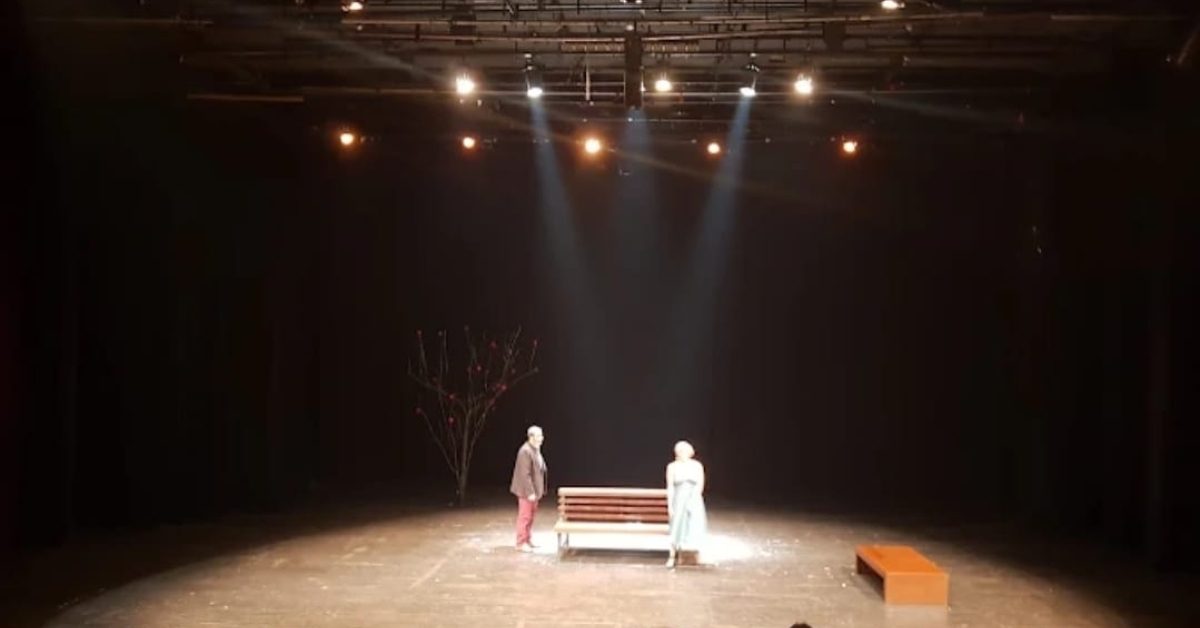
| | - Beirut's stage turns 33: City Theatre is celebrating its 33rd anniversary with a packed season — tarab evenings, ballet, contemporary dance, and over 1,300 works hosted from Lebanon and 12 other countries since its founding, including a new small-theatre space called "Fadaa Al Madina" launching this October.
- Two passports, one heart: An Al Jazeera portrait follows Naima and Natalie — two women of Lebanese descent who moved from Brazil to Lebanon — and finds that identity never quite settles anywhere: in Brazil they're Lebanese, in Lebanon they're Brazilian, and both say they miss wherever they're not.
- 50 years, one schoolyard: U2 marked their 50th anniversary by returning to Mount Temple Comprehensive in Dublin — the school where a 14-year-old Larry Mullen Jr pinned a note saying "Drummer seeks musicians" — and played seven songs for pupils who weren't alive when the band sold their first 175 million records.
- Miss Lebanon, proud southerner: Perla Harb, who hails from Maamariye in the South, was received by President Aoun after representing Lebanon at Miss World in Vietnam — and is now preparing to compete at Miss Universe in Puerto Rico, carrying, as Aoun put it, "the bright image of Lebanon" with her.
|
|
That's your Saturday — wherever you're reading from, step away from the screen and go find something delicious. |
Mount Lebanon was famous for silk production in the 19th century. |
Lebanon news, every weekday morning. Free, sharp, ~5 minutes. |
|
|
|
|