|   | Kifkon. South Lebanon's villages are being emptied one explosion at a time, UNIFIL is officially packing up with no replacement in sight, and Walid Jumblatt has written a memoir that somehow manages to critique the system he spent five decades running — it's a Monday that asks big questions and offers very few answers. |
|
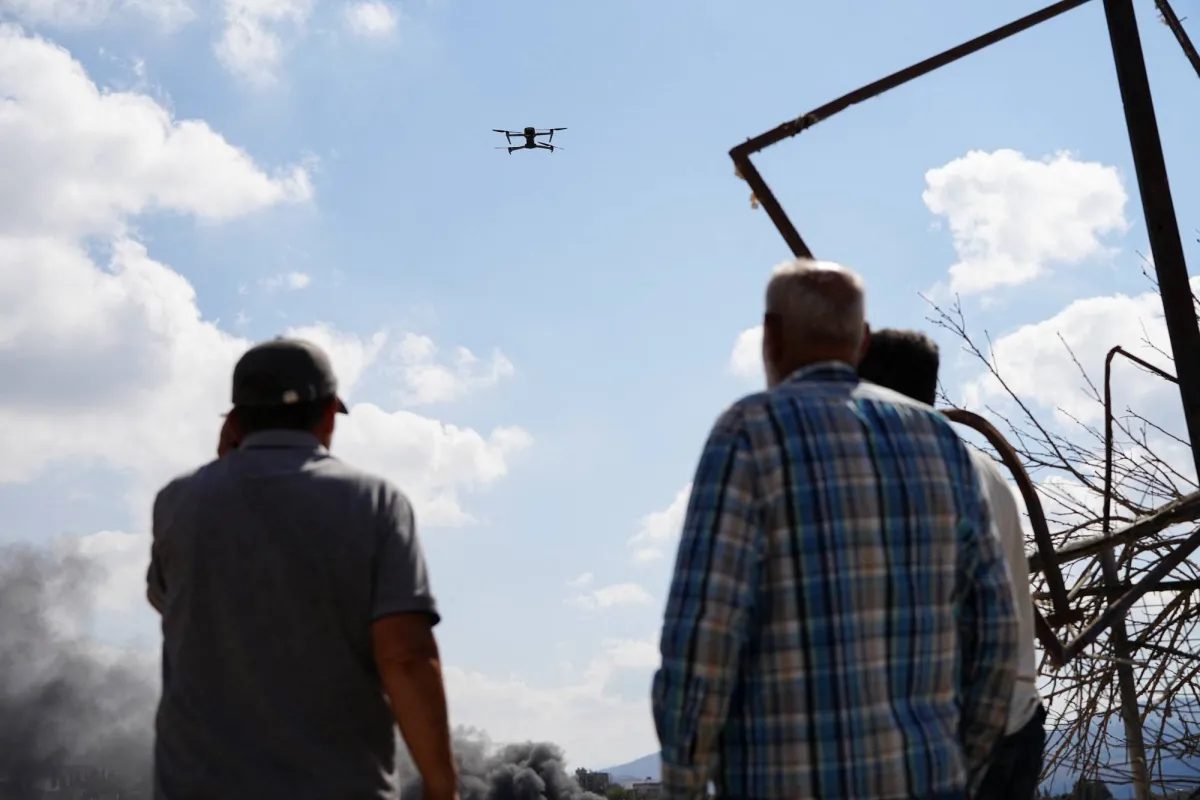
| | Israel Is Building a Second Buffer Zone — Beyond the First OneFor months, Sobhiye readers have followed Israel's demolitions along its self-declared Yellow Line in south Lebanon. Now the operation has expanded: Israeli forces are systematically destroying towns beyond that line, emptying villages across three sectors in what Lebanese security sources say is a deliberate effort to create a new buffer zone — and clear the ground for potential long-term occupation.
- Across the western, central, and eastern sectors, affected towns include Mansouri, Majdal Zoun, Baraashit, Haddatha, Beit Yahoun, Zawtar al-Sharqiyah, Nabatieh al-Fawqa, and Kfar Tibnin — towns sitting outside the Yellow Line, which itself already extends up to 12 kilometers into Lebanese territory in some areas.
- In Mansouri alone, sources count more than 130 demolitions; Israeli tanks enter nearly daily to rig buildings with explosives, and have cut down olive trees as far as the coastal road.
- Haddatha and Beit Yahoun are completely emptied; Baraashit is nearly deserted; Nabatieh al-Fawqa was abandoned after a June strike killed a teacher and her children returning home for belongings.
- A Lebanese security source says the goal is a "scorched zone" that prevents Hezbollah from monitoring Israeli positions — and that keeps Israeli forces positioned to seize additional territory quickly if politically authorized.
What to watch: Whether Beirut can translate international pressure into any concrete mechanism that halts the expanding demolition campaign before more villages pass the point of no return. The UN Has Pulled the Plug on UNIFIL — and Nobody Has a ReplacementAfter nearly half a century patrolling south Lebanon, UNIFIL is definitively leaving. The UN Security Council has decided this extension — through December 31, 2026 — is the last, with a full-year structured withdrawal to follow. The problem: nobody has figured out what comes next, and the clock is ticking.
- At its peak, UNIFIL deployed more than 7,500 soldiers and drew personnel from more than 20 countries — at one point totaling over 41,000 officers and military personnel over its lifetime; about 600 southern Lebanese currently work directly with the force and are already facing the first waves of layoffs.
- A French-Italian initiative — with Rome and Paris announcing an alliance to support Lebanon post-UNIFIL — remains entirely undefined: no force size, no legal mandate, no deployment timeline.
- Israel, through Rome-based mediators, proposed Italian forces monitor areas of Israeli withdrawal in pilot zones while simultaneously overseeing Hezbollah disarmament — a condition Hezbollah's Secretary-General Naim Qassem flatly rejected, calling the framework agreement "non-existent."
- The Paris preparatory conference on Lebanon army support last week ended without a single practical decision, its conclusions referred to "further study."
Why it matters: UNIFIL's departure without a ready alternative risks a triple loss for the south — security, economic livelihood for hundreds of families, and the humanitarian services the international force has provided to border communities for decades. Walid Jumblatt Writes His Memoirs — and Sidesteps the Hard QuestionsWalid Jumblatt, the Druze patriarch who has shaped Lebanese politics for five decades, has published his memoirs — "A Destiny in This Orient" (Naufal, 2026). A review in Al Modon finds a man proud of his achievements, honest about some failures, but unwilling to fully reckon with his own role in the system he criticizes.
- Jumblatt's defining pride is the 2001 Mountain Reconciliation he engineered with Maronite Patriarch Nasrallah Sfeir, which he frames as Lebanon's model for coexistence over sectarian conflict.
- He acknowledges the killing of Christians in Chouf villages during the civil war as "a black page" he wishes he could erase — but stops short of a systematic critique of his father Kamal Jumblatt's wartime decisions, despite being arguably the best-placed person to deliver one.
- Jumblatt praises the October 17 uprising and says he understands the resentment directed at him — yet doesn't address how that squares with decades of playing the very sectarian power-sharing game he condemns.
Zooming out: The memoir lands at a moment when Lebanon's entire political class is being asked the same uncomfortable question the reviewer poses to Jumblatt: if sectarianism is the problem, what did you personally do to entrench it? |
|
as of 2:31 AM GMT · Source: Polymarket |
What is kishk made from? | | | Bulgur and yogurt fermented |
| |
Scroll to the bottom for the answer — or play all 10 at sobhiye.news/games/trivia |
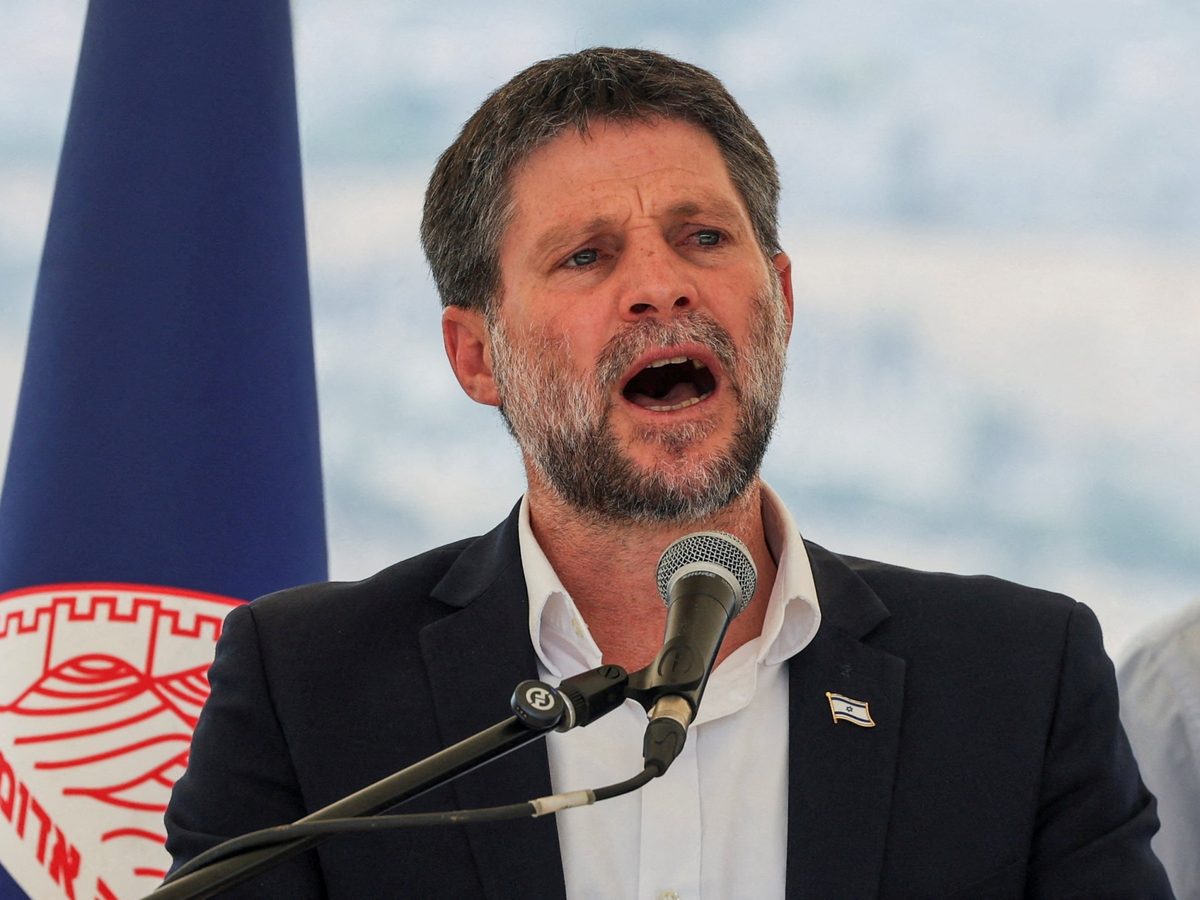
| | - Annex this, Smotrich: Israel's far-right Finance Minister Bezalel Smotrich called for war in the occupied West Bank, annexation of Gaza's Israeli-controlled territory, and — yes — southern Lebanon up to the Litani River, telling Ynet News Israel should "do there what we did in Gaza." Analysts warn it's less election rhetoric, more declared policy.
- Mar Mikhael, RIP: The 2006 alliance between the Free Patriotic Movement and Hezbollah is functionally dead, FPM sources told LBCI — reduced to normal inter-party parliamentary contact after a public spat between Gebran Bassil and former Hezbollah MP Nawwaf Moussawi, who called Bassil's remarks "shameful."
- Patriarch to politicians: enough waiting: Maronite Patriarch Al-al-al-Rahi, speaking at a cathedral consecration attended by President Aoun, called for the state to monopolize weapons and security decisions, demanded banking reform move forward, and warned that Lebanese depositors have waited long enough for their rights to be restored.
- Solidere's mandate, negotiated: The government rejected SOLIDERE's request for a 25-year extension of its downtown Beirut mandate, instead proposing an initial 8-year extension — with a possible further 6 years — tied to an independent audit, binding public project deadlines, and a broader economic role for the city center.
- Port file, hollowed out: Lebanonfiles reports the long-delayed Beirut Port explosion indictment may contain no clear accusation over who allowed the explosive materials into the country and no direct responsibility for the blast itself — with leaked references to Michel Aoun described by sources as a distraction from the investigation's core findings.
|
|
| ─ | Parallel Rate | 89,550 LBP | 0.00% | | ─ | Official Rate | 89,500 LBP | 0.00% | | ▼ | Gold | $4,248.2 | -1.69% | | ▼ | Bitcoin | $83,700 | -0.90% | | ▲ | S&P 500 | 7,743.41 | +0.49% |
as of 2:15 AM GMT · Source: lbprate, BDL, Yahoo Finance, CoinGecko |
| | Serbia's Vučić Steps Down — and Into a Snap ElectionAleksandar Vučić has dominated Serbian politics since 2014, serving as both prime minister and president. Barred from a third presidential term and facing the largest street protests in over a decade — sparked by a deadly railway station canopy collapse that killed 16 people in Novi Sad in November 2024 — he's now resigning to contest the parliamentary vote instead.
- Vučić resigned the presidency to lead his Serbian Progressive Party in a snap parliamentary election set for October 25, with Parliament Speaker Ana Brnabic serving as acting president in the interim.
- One of his final acts: pardoning 49 people, including 23 convicted in connection with the protests.
- A student-led movement is contesting the election under "Students Win," backed by several opposition parties, with a list of 250 candidates drawn mostly from academia and professional fields.
- Average net monthly salary in Serbia stands at 1,032 euros ($1,174), compared to 1,555 euros ($1,770) in neighboring Croatia — a contrast shaping the public debate heading into the vote.
What to watch: Whether the student-backed coalition can translate two years of street momentum into parliamentary seats on October 25, and what a potential shift in Belgrade's political direction could mean for an already tense Western Balkans. Iraq's Iran Flight Ban Becomes a Test of Who Actually Runs the CountryWhat started as a bureaucratic headache — Iraqi airports refusing to service Iranian airlines to avoid US sanctions — has escalated into a standoff between the Iraqi government and Iran-aligned militias over who controls sovereign Iraqi facilities.
- Militia group Harakat al-Nujaba's leader Akram al-Kaabi called for preparations to occupy Iraqi airports if flights with Iran are not resumed, framing the ban as continued US dominance over Iraqi decision-making.
- Kata'ib Hezbollah separately called for "breaking the siege" on Iran and urged Iraqis to support Iranian products.
- Iraqi security sources say precautionary measures are already in place to secure airport facilities against potential sit-ins.
- The government's counter-move: direct talks with Washington seeking exceptions for flights tied to medical treatment, education, and religious visits — an off-ramp that could undercut militia arguments without formally defying sanctions.
The bigger picture: The airport standoff lays bare a structural tension in Iraqi governance — between a government trying to protect its institutions from sanctions exposure and armed factions with the leverage to turn a procedural dispute into a sovereignty crisis. Google Is Launching a Server Into Space — and It's Not a MetaphorAI's hunger for electricity is becoming an infrastructure problem: data center power consumption reached around 485 terawatt-hours in 2025 and could nearly double by 2030. Google's answer is to look up. On October 1, the company is sending computing hardware into orbit to test whether space could host part of the world's AI infrastructure.
- The experimental satellite, roughly the size of a refrigerator and carrying four Google TPU chips, will launch aboard SpaceX's Transporter-18 mission on a Falcon 9 rocket.
- Heat is the first obstacle: without air in orbit, chips can only run continuously for around 15 minutes before needing to cool down.
- The upside: Google says solar panels in a suitable orbit could generate up to 8 times the power they produce on Earth, thanks to near-constant sunlight.
- By 2027, Google plans to launch two satellites to test optical laser communication between them — a step toward distributed chips operating as a single data center.
Zooming out: Orbital computing remains far from commercial viability — launch costs, radiation, and cooling physics are all unsolved at scale — but the experiment marks the first serious hardware test of an idea that could reshape how AI infrastructure is built over the next decade. |
|
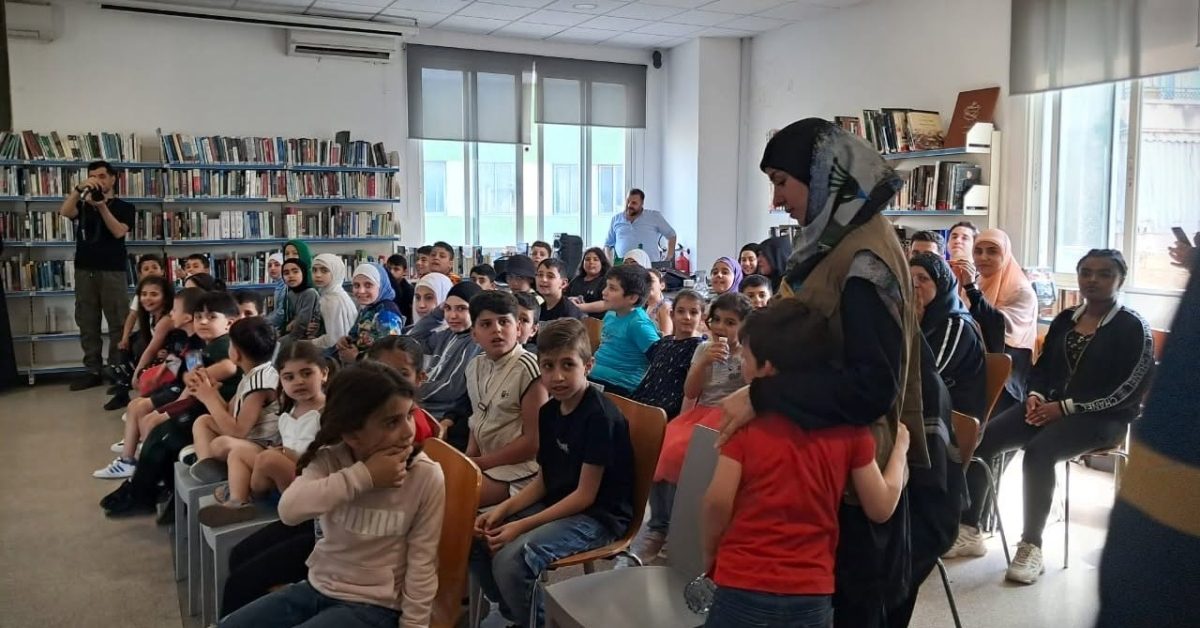
| | - Beirut's library, immortalized: The public library in Bachoura — the largest and oldest in Beirut — has been named after novelist Elias Khoury, whose works like "Bab Al-Shams" gave voice to Palestinian memory and Lebanese war. Students from a local school read passages from his novels aloud among the shelves, keeping his words alive for a new generation of readers.
- Lebanon's fastest woman, standing tall: Aziza Sbaity, celebrated as the fastest Lebanese woman in history, competed at the Asian Games in Aichi-Nagoya, sending a message about diversity — a Black Lebanese woman born in Liberia who holds the national 100-meter record, named by the BBC as one of its 100 most inspiring women in 2023.
- Godzilla goes R-rated: "Godzilla Minus Zero" had its rapturous world premiere at the New York Film Festival, earning mid-screening applause and becoming the first entry in the 72-year-old franchise to receive an R-rating — director Takashi Yamazaki said cutting the key scenes "was not an option."
- Ireland 3, Israel 0: In a UEFA Nations League match held in Hungary, Ireland defeated Israel 3-0, with players wearing black armbands, bowing heads during Israel's anthem, and skipping the pre-match handshake — Ireland's captain Dara O'Shea pledged to donate his match earnings to Gaza aid.
|
|
That's Monday in your inbox — step outside, get some air, and we'll see you back here tomorrow morning with whatever the night brings. |
| ✓C. Bulgur and yogurt fermented |
Kishk is fermented bulgur and yogurt. |
Lebanon news, every weekday morning. Free, sharp, ~5 minutes. |
|
|
|
|