|   | Sabah el kheir. Lebanon's prime minister walked into Washington and basically said: we've done our part — now what are you going to do about it? That's the energy today, alongside a sharp question about whether Hezbollah can even say yes to a deal without asking Tehran first, and $200 million headed toward the farms that kept feeding the country while the banks were busy collapsing. |
|
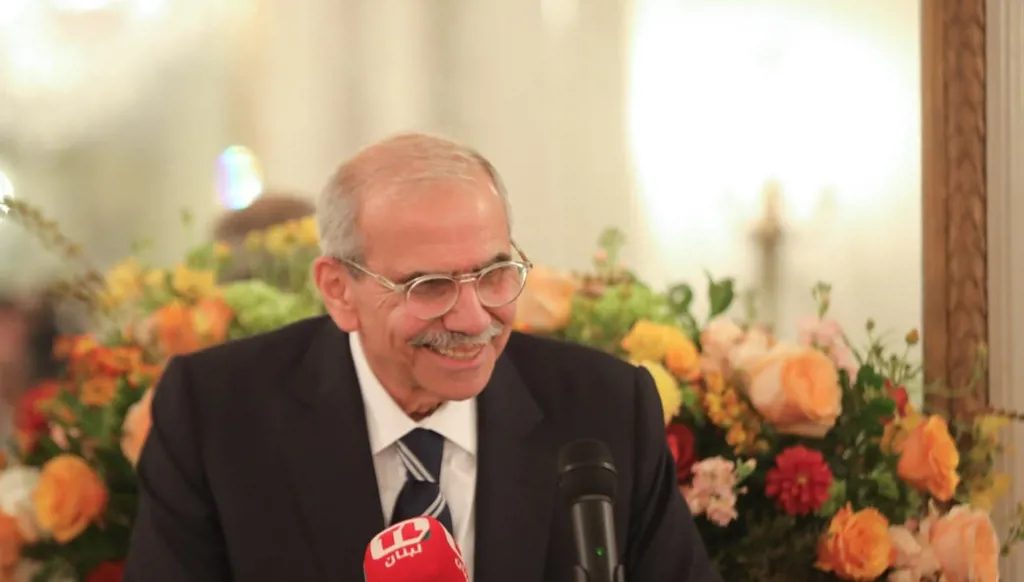
| | Salam Puts Washington on Notice: Implement the Framework or Watch Lebanon StallLebanon's Prime Minister Nawaf Salam flew to Washington with a message that flips the script: stop asking what Lebanon is prepared to do, and start asking what the U.S. will deliver. In meetings with Secretary of State Marco Rubio and a room full of senior American officials, Salam pushed hard for concrete steps on the stalled tripartite framework — the U.S.-brokered deal that was supposed to end the conflict with Israel and bring Hezbollah's weapons under state control.
- Salam met with Rubio, Treasury Secretary Scott Bessent, World Bank President Ajay Banga, and IMF Managing Director Kristalina Georgieva — a lineup that signals Lebanon is pitching sovereignty and solvency at the same time.
- He called for a clear timeline on Israeli withdrawal, a credible verification mechanism, and parallel progress on weapons confinement — insisting both tracks must advance concurrently.
- Rubio reaffirmed U.S. support on X, describing the Trilateral Framework as "the only path to a durable peace with Israel" and pledging to stand with "a sovereign Lebanon, free from Hezbollah and Iranian influence."
- Meanwhile, Israel carried out a large explosion in the southern town of Mansouri on the same day, underscoring how far the ground reality is from any framework on paper.
What to watch: Whether the U.S. moves from endorsing the framework in statements to enforcing it in practice — that gap is where Lebanon's next year will be decided. Can Hezbollah Actually Say Yes? The Iran Problem Nobody Wants to NameHezbollah is cornered — militarily weakened by the recent Israeli war, politically squeezed by mounting political and military pressures, and facing calls to hand its weapons to the Lebanese state. But Daraj's sharp new analysis asks the question that cuts deeper than tactics: even if Hezbollah's leadership wanted a settlement, could it make that call without Tehran's permission?
- The piece draws on the precedent of Yasser Arafat's 1982 withdrawal from Beirut — a Palestinian decision made independently of regional allies, at enormous political cost — as a lens for what genuine strategic autonomy looks like.
- When former Hezbollah Secretary-General Subhi al-Tufayli opposed joining Lebanon's 1992 elections — a direction Tehran's Khamenei endorsed via fatwa — he was removed, then expelled, then effectively besieged in his own village.
- For Iran, Hezbollah's arsenal isn't a Lebanese internal matter — it's a multi-billion-dollar strategic card used to project regional influence and sharpen Tehran's negotiating hand with Washington.
- The analysis concludes that any serious weapons review inside the party risks being read not as a policy disagreement but as a challenge to Iranian strategy itself.
The bigger picture: The weapons question in Lebanon has never been purely Lebanese — and this analysis makes the case that the answer, whenever it comes, won't be either. $200 Million Is Coming for Lebanese Agri-Food — and Farmers Are Paying AttentionFor the first time since the 2019 financial collapse froze Lebanon's lending markets, medium-term financing is returning to the agricultural sector. A World Bank-backed initiative is channeling real money to the farms, food processors, and rural businesses that kept producing even when the banks didn't.
- Project GATE — the Green Agri-food Transformation for Economic Recovery — is a $200 million World Bank initiative; within it, Kafalat will deploy a $47.6 million dedicated lending mechanism for SMEs in the agri-food and agri-rural tourism sectors.
- The program is expected to reach around 390 companies, farmers, and cooperatives, with loans ranging from $300,000 to $400,000 at a declining variable rate starting at 7.14 percent, adjustable every six months.
- The stakes are real: one in every five Lebanese households derives income from agri-food, yet agriculture received only around 1 percent of bank lending even before the crisis — and Lebanon still imports roughly 80 percent of the food it consumes.
- Untapped export opportunities in the sector are estimated to exceed $450 million, with European and Gulf markets identified as primary targets; the program prioritizes women-owned businesses and export-ready firms.
Why it matters: Getting credit flowing back to Lebanese farms doesn't just help farmers — it chips away at the 80 percent import dependency that makes Lebanon's food security hostage to every dollar-shortage and supply shock. |
|
as of 3:01 AM GMT · Source: Polymarket |
What does "Li bi re2eb el nes, bi mout bi hammo" warn against? | | | Obsessive monitoring of others |
| |
Scroll to the bottom for the answer — or play all 10 at sobhiye.news/games/trivia |
| | - Strike? What strike: Transport unions suspended Wednesday's planned general strike after the Finance Ministry agreed to pay public transport drivers a monthly lump-sum of 12 million LBP (about $134) starting October 1 — but civil servants are still walking out Wednesday and Thursday, and every Friday until their transport demands are met.
- Jezzine's turn coming: Ali al-Taher Hill has fallen, and analysts now warn Israeli operations will expand toward Jezzine — where Hezbollah's defensive lines have shifted into rugged terrain ranging from 950 to 1,400 meters elevation — unless Lebanon-Israel negotiations resume before the Israeli elections.
- History, literally leveled: Israeli strikes have completely razed 147 heritage homes in Nabatieh alone — some over 200 years old — including a Mamluk-era market, a Crusader castle, and a cultural center that housed manuscripts documenting decades of southern Lebanese political history.
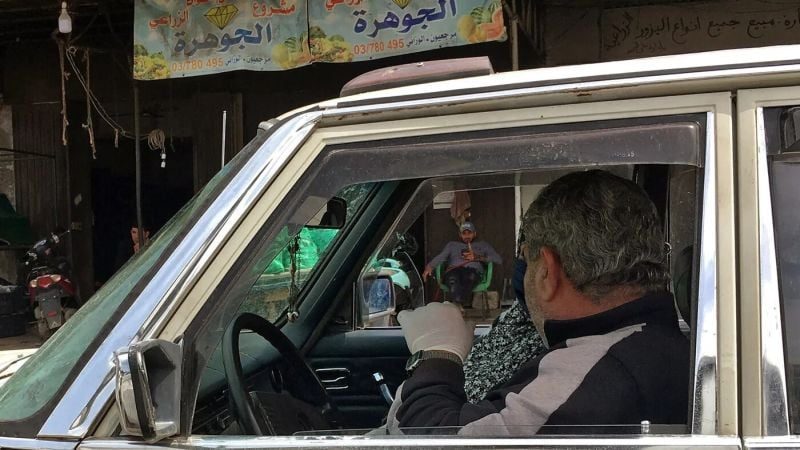
- Five jobs the crisis built: Lebanon's collapse spawned an entirely new informal economy — solar installers, inverter repairmen, rooftop ampere sellers — with solar capacity jumping from 78 megawatts in 2019 to 1,190 megawatts by 2024, none of it regulated by any state authority.
- The "free" university myth: Lebanese University registration costs $146 a year, but a student commuting from Halba by car spends roughly $5,200 on gasoline alone over nine months — more than 35 times the annual tuition, before a single photocopy.
|
|
| ─ | Parallel Rate | 89,300 LBP | 0.00% | | ─ | Official Rate | 89,500 LBP | 0.00% | | ▲ | Gold | $4,204.2 | +0.86% | | ▲ | Bitcoin | $83,367 | +0.49% | | ▼ | S&P 500 | 7,670.84 | -0.94% |
as of 2:42 AM GMT · Source: lbprate, BDL, Yahoo Finance, CoinGecko |
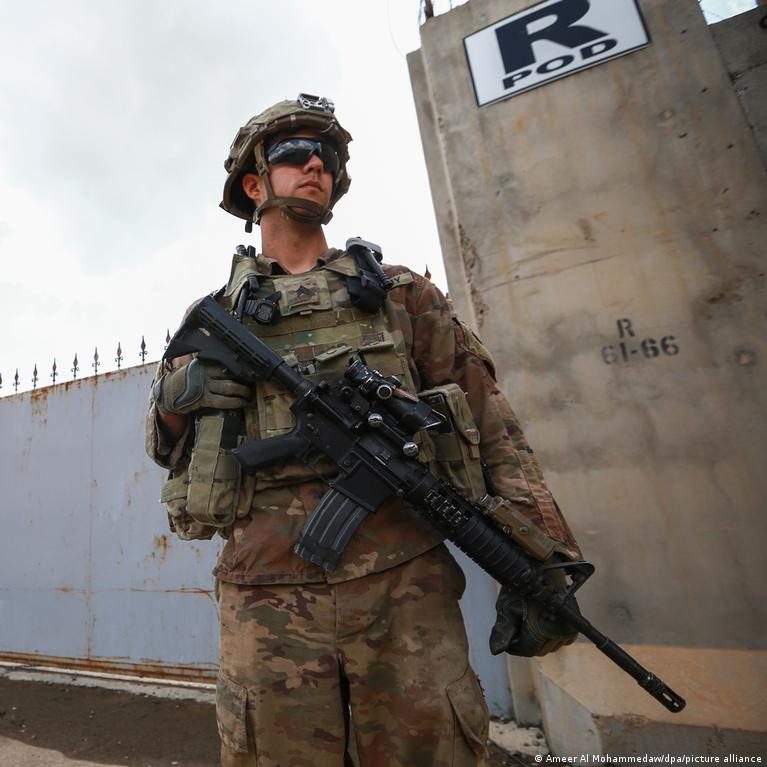
| | End of an Era: US Troops Complete Iraq Withdrawal After 12 YearsToday, October 1, the last of America's 2,500 remaining troops completed their withdrawal from Iraq, closing out a military presence that began with the 2003 invasion, paused in 2011, and restarted in 2014 to fight ISIS. Baghdad is celebrating with four public holidays and calling it Independence Day.
- The withdrawal concludes 12 years of the US-led Operation Inherent Resolve mission against ISIS, per a 2024 agreement between Baghdad and Washington, according to Deutsche Welle.
- Armed groups remain a live problem: hardline factions including Kata'ib Hezbollah have rejected disarmament, prompting Baghdad to push the weapons handover deadline to June 30, 2027.
- Kurdish leaders in Erbil are already calling on Baghdad for protection, as Iran-backed militia attacks on US-linked targets there have risen since the US-Israeli war with Iran began in February.
- US-Iraq ties shift to economic cooperation, not security — but analysts warn many armed groups will remain outside central government control well beyond the new deadline.
What to watch: Whether Baghdad can bring Iran-backed militias to heel now that the US military umbrella is gone — that test begins today. Turkey's $17 Billion Fund Scandal Is Now an Erdogan Political CrisisWhat started as a financial fraud story has become a political earthquake in Ankara. Turkish authorities ordered the liquidation of around 130 investment funds worth $17 billion after they were found to be running Ponzi-like schemes — and the money trail leads uncomfortably close to Erdogan's inner circle.
- Half a million people were affected; one fund, Tera, posted returns of over 1,500 percent in a single year — a figure, as analysts put it, that is "totally illogical by any market calculation."
- The AKP's former family minister resigned after the opposition accused her of selling shares before the September 16 market sell-off that followed the scandal's eruption.
- One of Erdogan's chief advisers sat on Tera Portfolio Management's board until January 2026; another former presidential adviser remained until the crisis broke.
- Authorities froze assets of 46 legal entities and 42 individuals, then partially reversed the order after fears of a market collapse — Turkish stocks still fell 2.38 percent on Monday.
Zooming out: Many of those burned by the funds are believed to be ruling-party voters, raising the political stakes well beyond a financial scandal ahead of the 2028 presidential election. Syria's Property Nightmare: Assad's Decrees Still Haunt Douma's LandownersAssad fell. His laws didn't. In Douma, a Damascus suburb that endured years of siege and bombardment, residents who bought or sold property during the conflict are still trapped by Decree No. 11 of 2016 — an Assad-era law that froze real estate records in opposition-held areas and is now being weaponized to strip people of homes they legitimately purchased.
- The Douma Real Estate Registry documented roughly 11,000 transactions during the siege years, including 9,000 sales contracts — none of which the decree formally recognizes as valid.
- A local Reconciliation Council, staffed by more than 7,000 volunteers across Syria, has managed to resolve only about 10 real estate cases in Douma amicably; most require court action.
- No counter-decree has been issued by Syria's new Ministry of Justice; the Reconciliation Council has sent requests to multiple ministries and received no substantive response, though the Governorate suggested forming judicial committees.
The bigger picture: Syria's new government faces a test of transitional justice that is less dramatic than war crimes tribunals but just as consequential — hundreds of thousands of property claims with a dead regime's law still on the books. |
|
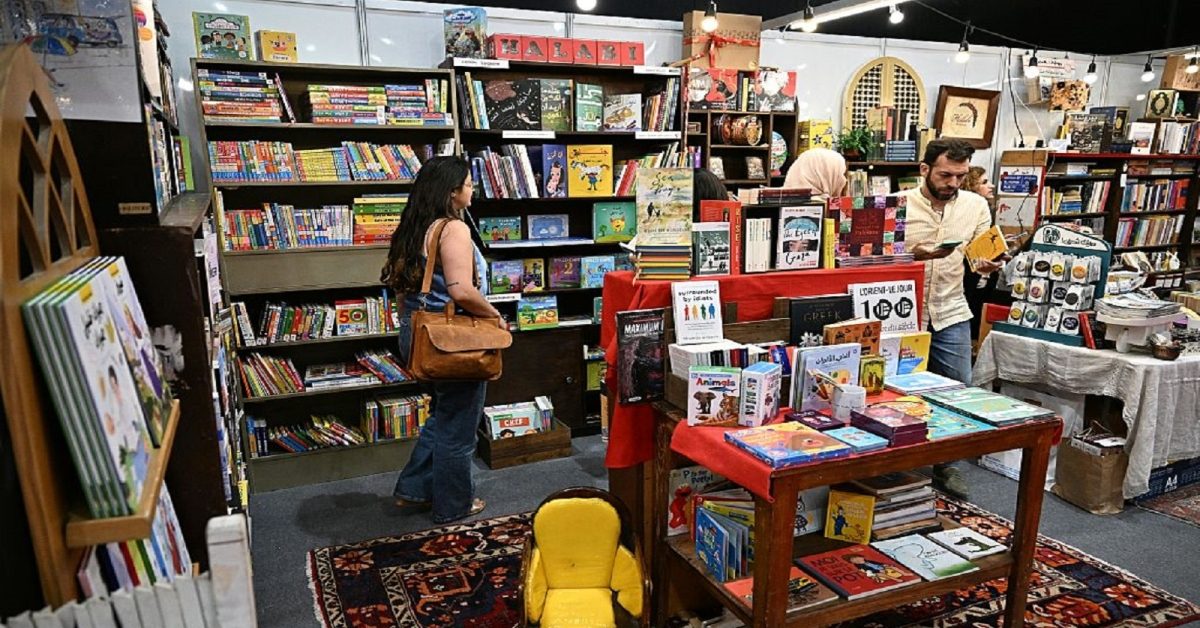
| | - Beirut's book fair is back: The 67th Beirut International Arab Book Fair returns October 9–18 at the Beirut Waterfront, with seminars marking the centenary of journalist Ghassan Tueni, a musical evening with artist Rima Khcheich, and guests from Lebanon, Jordan, Egypt, and beyond — richer in programming than any previous edition.
- Lebanon: world's third coffee nation: Your morning cup is basically a national identity statement — Lebanon ranks third globally among countries with populations over 3 million for coffee consumption per person, at 12.91 kg per capita annually, ahead of Finland, Sweden, Denmark, and Norway, and topping the entire list as recently as 2015.
- A son's love letter to Lebanese theater: Writer and artist Omar Mikati has published "Nizar's Journey," a biography of his father Nizar Mikati — founder of Lebanon's first daily theater in 1965 — weaving family memory with the golden history of Beirut's stage and radio, with a book signing planned at the Beirut Book Fair on October 17.
- Africa's Olympic moment arrives: Senegal is about to make history as the first African nation to host an Olympic event — the Youth Olympics in Dakar, October 31 to November 13 — welcoming around 2,700 young athletes across 153 events in 25 sports, in what could be the last-ever summer edition of the Games.
|
|
Wherever you're reading from, step away from the screen — your coffee's getting cold and that's basically a national emergency. |
| ✓C. Obsessive monitoring of others |
The damage is self-inflicted mental exhaustion. |
Lebanon news, every weekday morning. Free, sharp, ~5 minutes. |
|
|
|
|