|   | Yalla — Lebanon's government approved a budget, blocked an electricity reform, and tripled its medicine spending, all in the span of a week. The question isn't whether things are moving; it's whether they're moving honestly. Spoiler: one of those budgets has three very large holes in it. |
|
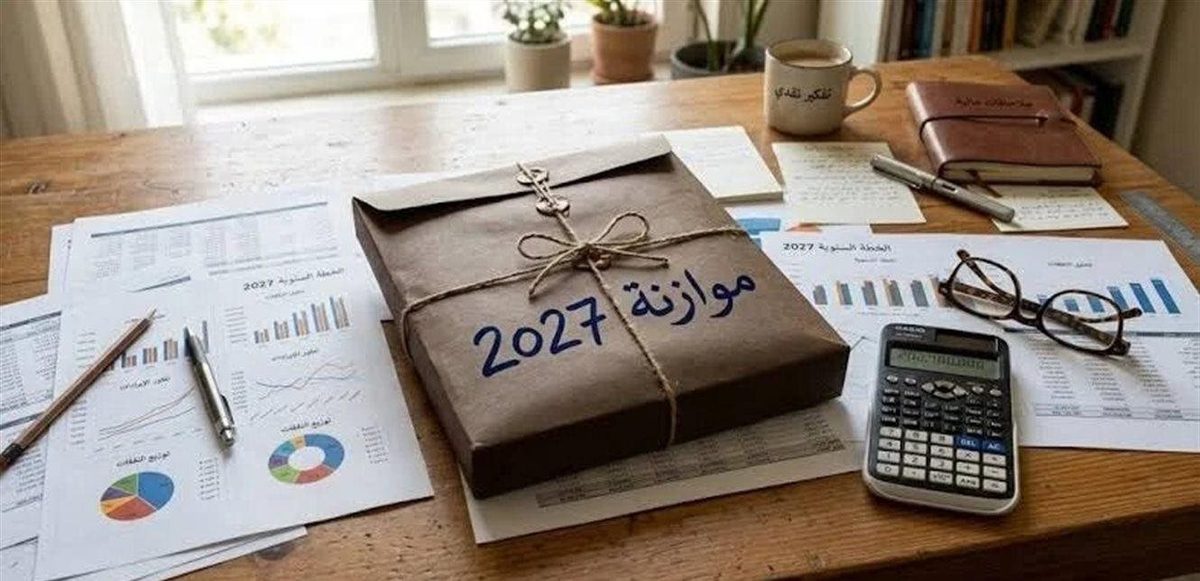
| | The 2027 Budget Is Approved — but Three Giant Line Items Are MissingLebanon's Council of Ministers approved the 2027 draft budget this week and sent it to parliament — but a financial expert is flagging that three of the biggest obligations the state actually owes aren't in it: public debt, the government's share of the financial gap, and reconstruction costs.
- Banking expert Dr. Mohammad Fheili told Lebanon 24 that omitting these commitments doesn't make them disappear — and that if they were included in full, the budget would reveal a significant book deficit.
- The worry isn't just accounting: in a dollarized economy that can't borrow from international markets, a visible deficit raises the specter of the Central Bank monetizing the gap — and Fheili warns that the mere expectation of money-printing can move the exchange rate before a single lira is printed.
- The three missing items aren't finalized yet — the financial gap law hasn't passed, public debt restructuring is incomplete, and reconstruction financing remains unclear.
- Fheili also argued the government is juggling seven interconnected files simultaneously — the financial gap law, banking sector restructuring, public debt, the budget, reconstruction, the Financial Action Task Force (FATF) file, and the agreement with the International Monetary Fund — and that resolving one in isolation risks creating repercussions for the others.
What to watch: Whether parliament pushes back on the gaps before ratification — or passes a budget that, by design, doesn't show what Lebanon actually owes. Lebanon's Electricity Bill Trap: EDL or the Generator Guy Wins Either WayLebanon's cabinet rejected a proposal to introduce a variable electricity tariff tied to oil prices — but the math suggests the people it was trying to protect may end up paying more anyway.
- Energy Minister Joe Saddi proposed the variable tariff so EDL could afford more fuel and increase supply hours; most ministers blocked it, arguing the timing was wrong.
- The problem: EDL's current rate for heavy users is 27 cents per kilowatt-hour, while private generators already charge roughly 60 cents or more per kilowatt-hour — plus a fixed subscription fee — with a tariff that automatically adjusts to diesel prices monthly.
- Saddi says the state owes EDL around $350 million in outstanding dues; he's asked for $50 million per month in payments — and only one payment has been made so far.
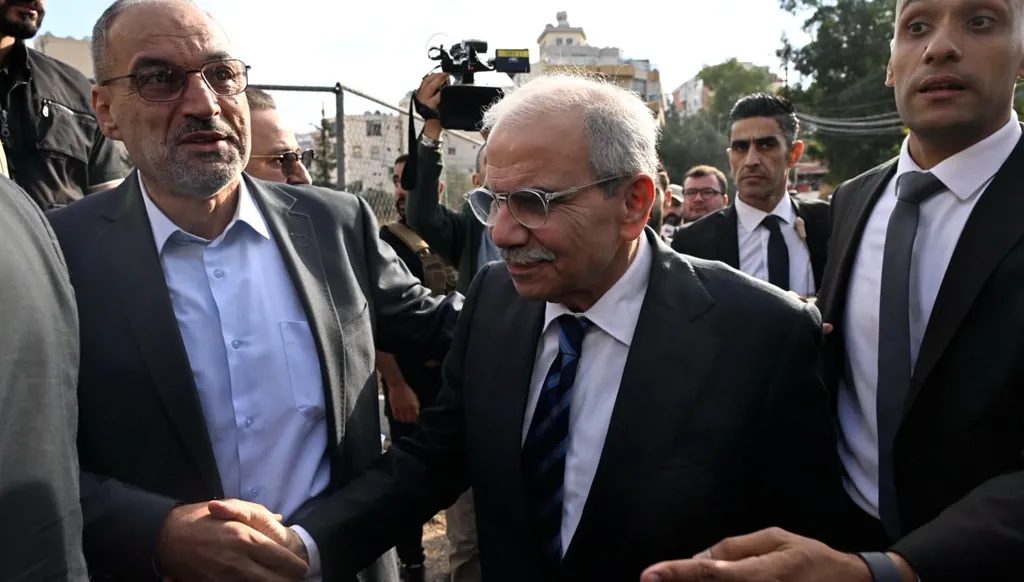
- The World Bank and IMF both told Saddi and Prime Minister Nawaf Salam in Washington that a variable tariff is a necessary reform step.
Why it matters: Blocking the variable tariff to shield consumers from a higher EDL bill only works if EDL has enough fuel to keep the lights on — which, right now, it doesn't. Lebanon's Health Ministry Has Tripled Its Medicine Budget — and Is Overhauling How Drugs Get ApprovedHealth Minister Rakan Nassereddine held a detailed press conference laying out a sweeping overhaul of Lebanon's pharmaceutical sector — with numbers that, for once, are moving in the right direction.
- Annual pharmaceutical spending has jumped from $24 million in 2024 to $172 million today — an increase of more than 600% — while the number of dispensed medicine packages rose from 77,000 to 410,000.
- Cancer and chronic-disease patients benefiting from state-covered medicines grew from roughly 19,630 in 2024 to more than 28,000 today, a 43% increase.
- On savings: competitive tendering cut one drug's price from $2,300 to $746 after adopting a biosimilar alternative — saving $7 million in the 2026 tender alone.
- A new National Drug Agency and Central Reference Laboratory are in formation; an electronic drug-registration platform goes live within a month.
Zooming out: The numbers show real momentum, but Lebanon's pharmaceutical overhaul still depends on building institutions — the National Drug Agency, the reference lab, the e-registration platform — that don't yet fully exist. |
|
as of 2:55 AM GMT · Source: Polymarket |
What does "Il-kalb bya3rif sahib bayto" mean? | | | Everyone knows their limits |
| |
Scroll to the bottom for the answer — or play all 10 at sobhiye.news/games/trivia |
| | - Salam's Nabatieh follow-through: On his third visit to Nabatieh since taking office, PM Salam announced 23 active tenders for road restoration, shelter rehabilitation, and medical equipment, plus 12 more launching this month — including renovation of 5 hospitals — alongside the reopening of the State Security Center and civil status office.
- Ankara says: never happened: Turkey's Communications Directorate formally denied last week's Reuters report that Syrian officials and Hezbollah held secret talks on Turkish soil, calling the claims — sourced by Reuters to six officials — absolutely inconsistent with reality.
- London's boots on the ground: Britain's Deputy Chief of Defence Staff Lieutenant General Sir Charles Collins wrapped a Beirut visit last week, meeting Speaker Berri, Army Commander Haykal, and the UN's Jean Arnault to reaffirm UK support for the Lebanese Armed Forces as the country's "sole legitimate defender."
- FAO's bleak harvest count: The UN Food and Agriculture Organization estimates 56,000 hectares — more than 22% of Lebanon's agricultural land — has been damaged by the latest conflict, with a June UN-backed assessment putting agricultural production losses at at least $530 million this year.
- Cranes over the crisis: While much of Lebanon rebuilds from rubble, luxury apartments listed at $500,000 or more are multiplying across East Beirut, Hamra, and Raouche — with one architect quipping that construction volumes may have jumped tenfold in a year.
|
|
| ─ | Parallel Rate | 89,600 LBP | 0.00% | | ─ | Official Rate | 89,500 LBP | 0.00% | | ▼ | Gold | $4,172.1 | -0.72% | | ▼ | Bitcoin | $84,645 | -0.32% | | ▲ | S&P 500 | 7,722.72 | +0.93% |
as of 2:39 AM GMT · Source: lbprate, BDL, Yahoo Finance, CoinGecko |
| | Israeli Soldiers Describe AI-Assisted Targeting in New Documentary — and One Says It's GenocideA new documentary called NAZA — Hebrew for "collateral damage" — features 24 anonymized Israeli soldiers and intelligence personnel describing in precise detail how AI systems were used to select airstrike targets in Gaza, including approved civilian death ratios and a tracking tool that monitored children's phones to locate their fathers.
- The film, co-directed by Israeli journalist Yuval Abraham and Rachel Szor, documents a military practice where up to 20 anticipated civilian deaths were approved per low-level suspected Hamas fighter eliminated, with one high-value target approved at a ratio of 500 civilian deaths.
- An AI system called "Where's Daddy?" tracked suspected operatives at home, meaning their families were often killed alongside them — one soldier describes using it against a 12-year-old girl.
- More than 73,000 Palestinians have been killed in Gaza since October 7, 2023, per the film's own count. One soldier, when asked directly, says Israel is committing genocide: "Yes. Completely."
- Netanyahu has threatened to revoke the filmmakers' citizenship; the film has been co-produced with The Guardian and draws on reporting previously published in +972 Magazine and Local Call.
The bigger picture: The documentary lands as 128 governments recently met in Geneva to discuss a framework for regulating autonomous AI weapons — a debate the film argues is already lagging behind battlefield reality. Israel, Turkey, and Somaliland: A New Proxy Rivalry Takes Shape in the Horn of AfricaWhen Israel formally recognized Somaliland in January 2026, the move was widely read as giving Israel a Red Sea foothold against Yemen's Houthis. But officials in Somaliland's capital Hargeisa say the real target of the partnership is Turkey — which has built its largest overseas military base next door in Somalia and is training Somali commandos with F-16s and Bayraktar drones.
- Somaliland officials told Middle East Eye they want Israel to supply air defence systems to counter Turkey's growing military presence in Somalia, where Ankara has a 10-year defence agreement and a 20-year lease to manage Mogadishu's seaport and airport.
- Somalia pledged Turkey 30% of revenue from any marine resources found in its exclusive economic zone — waters Somaliland considers its own.
- The UAE, closely aligned with Somaliland, holds a majority stake in the commercial port at Berbera and is expanding its air and naval bases there — tying Gulf rivalries directly into the Horn of Africa's new alliance map.
- Greece recently signed a $3.5 billion deal for an Israeli layered air defence system; the UAE received Iron Dome batteries earlier this year — showing Somaliland is not alone in seeking Israeli security partnerships.
Zooming out: The Israel-Turkey competition that's playing out visibly in Syria is quietly opening a second front in the Horn of Africa, reshaping alliances across the Red Sea corridor. Solar Hit a Record 30% Growth in 2025 — but Universal Access by 2030 Is a StretchProminent climate leaders including former UN Climate Secretary Christiana Figueres have signed an open letter calling for clean, affordable electricity for "everyone, everywhere by 2030." The solar numbers are striking — but the gap between exponential growth and universal access remains wide.
- According to energy think tank Ember, solar power grew at its highest rate in eight years in 2025, rising 30% over the previous year and more than tenfold since 2015.
- For the first time in 100 years, renewable energy sources overtook coal in the global electricity mix in 2025.
- Roughly 655 million people still lack electricity access; installed global solar capacity stands at 3 terawatts, while experts estimate 50 terawatts would be needed to fully transition global energy supply to renewables.
- Sub-Saharan Africa would need to triple its pace of electrification to reach universal access by 2030, according to the letter's signatories.
What to watch: Whether the political will and blended financing — from governments, the World Bank, and the African Development Bank — materializes fast enough to match the technology's now-proven pace of cost reduction. |
|
| | - Lebanon's basketball miracle: UPI published a feature on how Lebanese basketball became the country's collective exhale during the war — Al Riyadi claimed its 39th title, the federation oversees 148 clubs and an estimated 40,000 players, and the national team lost to China by just 2 points in the World Cup qualifiers. Basketball in the DNA, indeed.
- Van Gogh's $207 million spring: Sotheby's is auctioning Van Gogh's Blossoming Chestnut Trees (May 1890) in New York on November 18, with an estimated price of $207 million including fees — which would shatter the artist's current auction record of $117 million set in 2022. It last hung in a gallery in 1964.
- Lebanon's journalists go to Doha: At least 8 Lebanese journalists have moved to Qatari media institutions — including Al Jazeera and Al Araby TV — in the past six months alone, bringing diverse political and editorial backgrounds with them. Lebanon's loss of talent is Doha's gain, and Lebanese viewers will keep finding familiar faces on their screens.
- The prop who DMed a legend: England's newest rugby cap Emmanuel Iyogun — son of Nigerian immigrants, born in Spain, raised in Glasgow — cold-messaged South Africa's Ox Nché on Instagram asking for scrum tips, got a two-hour coffee session in return, and went on to become the 1,536th man to represent England's senior side. No salad. Just massive cakes.
|
|
Yalla, it's Saturday — close the laptop, call the cousin you've been ignoring, and we'll be back Monday. |
| ✓C. Everyone knows their limits |
Knowing where you belong and how far you can go. |
Lebanon news, every weekday morning. Free, sharp, ~5 minutes. |
|
|
|
|