|   | $200 million. That's what Reuters says Iran sent Hezbollah, and what Washington calls a "fake story." Bonjourein. Add Israel's talk of staying in the south "for years" and a disarmament knot nobody's untied, and you've got a morning that needs coffee first. |
|
| | Hezbollah Gets $200 Million From Iran, Sources Say. Washington Says It Isn't True.Hezbollah has received $200 million from Iran to help the Lebanese displaced by this year's war, two people with direct knowledge told Reuters. It would be the group's first significant aid to the supporters who bore the brunt of the fighting. The US flatly denies it. - The cash arrived last month, the sources said, with intermediaries charging a 20% fee. One source said that is four times the normal rate.
- Each family would get an initial $3,000, with priority for those whose villages are destroyed or inaccessible under Israeli occupation. One source put that group at around 50,000 families.
- Washington's line: the money "is not there." State Department spokesperson Tommy Pigott called it a "fake story" to save face, and Treasury says Iran is "running out of money."
- A Hezbollah official confirmed only that an amount had been secured, with a distribution plan due in the coming days.
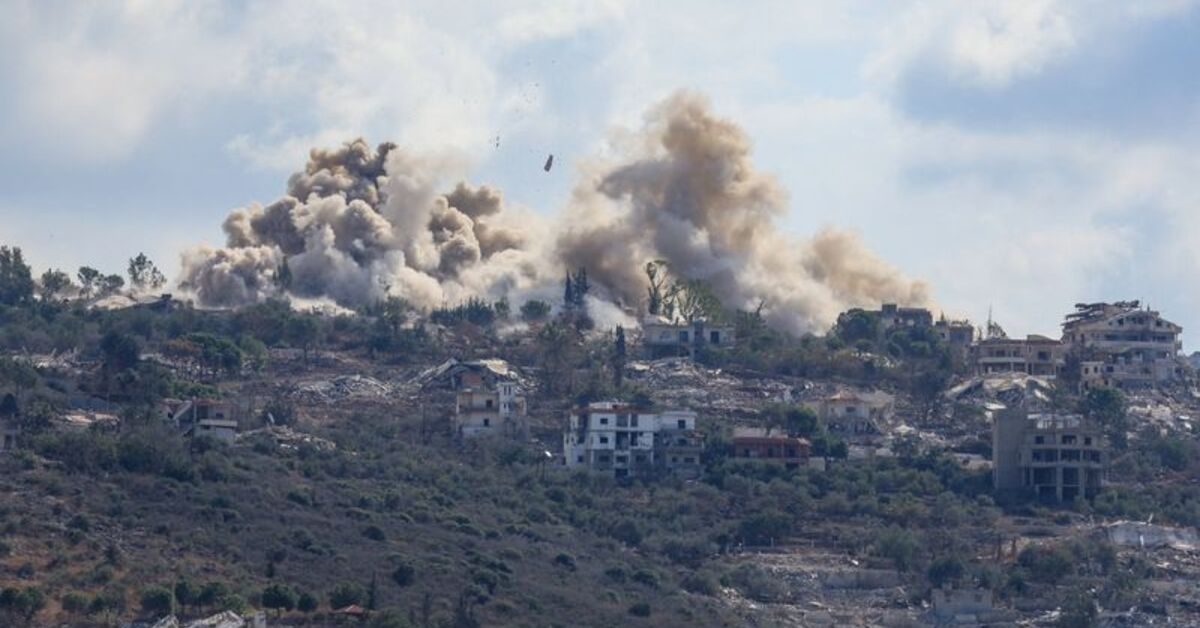
Why it matters: Prime Minister Nawaf Salam has estimated reconstruction from the two wars since 2024 could top $27 billion, so $200 million is a drop in a very large bucket. Israel Says It Isn't Leaving South Lebanon for "Years"The new detail since our last update: an Israeli military source told Sky News Arabia that forces will stay in the south "for years" and residents won't be coming home soon. That lands just before talks set for Oct. 20 in Tampa, Florida. - On Wednesday, Israeli forces moved around Haddatha and previously dug a new road near Zawtar al-Sharqiyah, while artillery hit Kounin and Mansouri.
- The source said Hezbollah infrastructure is still "everywhere" south of the "Yellow Line," and that finding it all would take years. The occupied zone runs roughly 8 to 10 kilometers north of the Blue Line.
- Israel is also weighing a narrower "Gray Line," about 3 to 4 kilometers from the Blue Line, as a possible future redeployment axis.
- The framework agreement's pilot zones have been frozen since August. One Israeli accusation: the Lebanese Army is "infiltrated" by Hezbollah, a charge L'Orient Today notes Israeli sources regularly use to pressure Beirut.
- Hezbollah hasn't claimed an attack since June.
What to watch: Tampa on Oct. 20 will show whether "years" is a negotiating posture or the actual plan, and whether the frozen pilot zones start moving again. Hezbollah in the State, Weapons Outside It: The Knot the Framework Can't UntieLebanon is now trying to implement a US-sponsored framework agreement with a clear timetable. Hezbollah sits in parliament and government while holding a position the state says it can't accept. A Lebanon24 analysis asks how both can be true at once. - The framework runs in sequence: army deployment, restored state authority, verified disarmament, then gradual Israeli withdrawal.
- Hezbollah chief Naim Qassem said on Sept. 27 the group won't give up weapons before Israeli forces withdraw.
- Beirut's counter: implementation must be reciprocal, and withdrawal can't be postponed indefinitely.
- The Lebanon24 piece frames it as bigger than guns. It's about who decides war and peace, and whether Hezbollah can shift from an armed force with its own decision-making to a political one working inside state institutions.
The bigger picture: Israel wants guarantees, the US wants a verifiable mechanism, and Beirut wants decision-making power back, so the sequencing fight is really a fight over who goes first. |
|
as of 3:30 AM GMT · Source: Polymarket |
| | - Berri takes the heat down: Speaker Nabih Berri has moved to rein in Hezbollah's attacks on PM Nawaf Salam, sources told Asharq Al-Awsat. Salam's Nabatieh trip was coordinated with Amal, and Hezbollah issued no statement criticizing it, unlike previous visits.
- Sanctions list on deck: Washington is no longer convinced by Lebanon's framework commitments, Lebanonfiles reports. The new twist: if Hezbollah disarmament and state control over weapons don't materialize, many individuals could be added to sanctions lists.
- Shots near Kfar Shouba: UNIFIL says small arms fire targeted one of its positions near Kfar Shouba on Wednesday morning, with no casualties. The Security Council has set December 31 as the end of the mission's mandate, and 7,500 peacekeepers are still deployed.
- Olive harvest, first step home: Displaced residents of Aalma ash-Shaab hope the olive season, expected after mid-October, can start their return. Around ten farmers got limited army permission to clean their groves in September, and they're waiting on a harvest permit.
- $3.7 billion, fewer deals: Lebanon's Land Registry recorded 34,083 property sales worth about $3.70 billion from January to August, per BLOMInvest Bank. Value has held up better than volume, which was still about 25% lower by the end of July.
|
|
| ─ | Parallel Rate | 89,550 LBP | 0.00% | | ─ | Official Rate | 89,500 LBP | 0.00% | | ▼ | Gold | $4,157.2 | -0.71% | | ▼ | Bitcoin | $82,913 | -1.24% | | ▲ | S&P 500 | 7,801.77 | +0.36% |
as of 3:15 AM GMT · Source: lbprate, BDL, Yahoo Finance, CoinGecko |
| Israelis Still Want Answers, Three Years After 7 OctoberThe 7 October 2023 attack was the deadliest in Israel's history, and three years later there is still no independent state inquiry into how it happened. With elections later this month, the question of who bears responsibility is now a campaign issue. - About 1,200 people were killed and 251 taken hostage. Kfar Aza alone lost 64 residents, with 19 kidnapped.
- Prime Minister Benjamin Netanyahu rejects personal responsibility and blames security chiefs for not waking him.
- His office calls a report of a UAE warning ten days before the attack "an absolute lie."
- His government proposed a politically appointed commission but ran out of time to pass the bill. Campaigners have asked Israel's highest court to force a state inquiry.
- Opponent Gadi Eisenkot's team even released a video game, "Sleepy Bibi."
What to watch: Polls suggest a close race, and the accountability question is shaping how many Israelis plan to vote. Spain's Housing Anger Has a Face, and Now a FuneralMaría del Carmen Abascal, 87, was evicted from the Madrid apartment she'd lived in for over seven decades after an investment firm bought it and sought to raise her rent. She died two weeks later, and her case has pushed Spain into a snap election. - Police used teargas during the eviction, and about 10,000 people marched in Madrid hours later under the banner "We're all Maricarmen."
- Rents have soared 80% in a decade, while house prices climbed 63%.
- PM Pedro Sánchez called the election after the PP, Vox and Junts voted down two emergency housing decrees.
- His cabinet then approved two new decrees with 21 measures, including a tax on seasonal rentals and a ban on speculative purchases.
- The firm had agreed she could return, and she reportedly died hours before signing a new lease.
The bigger picture: A single eviction turned an abstract housing debate into encampments, a general strike call and an early election. Iran's Enrichment: What Survived the Bombing Is Still the Open QuestionUS Vice President JD Vance says Iran must make a "meaningful" cut to its uranium enrichment capacity before the seven-month war can end. Nobody outside Iran knows exactly how much capacity or material it still has. - Before the June 2025 strikes, Iran held 440.9 kg of uranium enriched to 60%, enough for about 10 weapons if further enriched, per the IAEA.
- The agency's chief Rafael Grossi believes "a bit more than 200 kg" remains, mostly in tunnels at Isfahan.
- IAEA inspectors haven't returned to the bombed sites.
- Iran says it does not seek nuclear weapons. Vance says 60% enrichment serves no energy purpose.
Zooming out: With no known enrichment underway, any promised reduction will be measured against pre-war capacity, which the IAEA can no longer verify. |
|
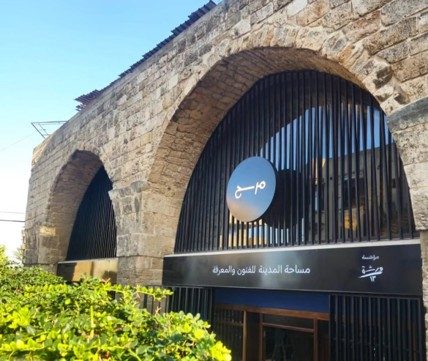
| | - Tripoli's art week opens: Marsah's ten-day Art Week begins October 9 with the free "Geography of Connection" exhibition, which runs until October 31. Another free show, "In the Beginning Was Water," is staged in a 13th-century Mamluk hammam, alongside concerts, dance and film.
- Messi's last tango: Lionel Messi ended his Argentina career with a goal and two assists in a 3-0 win over Benin in Buenos Aires. It was his 208th cap, and his 126th international goal came from the penalty spot before a tearful, singing crowd.
- Where stories begin: Lebanese novelist Basma Elkhatib told a Beirut library audience she once read "The Little Prince" in a war shelter. Her novel "Weavers of Eternity" follows women across generations, tying together weaving (الحياكة) and storytelling (الحكاية).
- Taleb meets Valentino: Amioun-born thinker Nassim Nicholas Taleb inspired Valentino's SS27 show in Paris. Guests were asked to bring books for donation to public libraries, and designer Alessandro Michele borrowed Taleb's "antilibrary" idea: unread books as a measure of curiosity.
|
|
That's your morning, so take it slow, and let the day's first stop be somewhere with a good view. |
Amin Maalouf is a celebrated author. |
Lebanon news, every weekday morning. Free, sharp, ~5 minutes. |
|
|
|
|