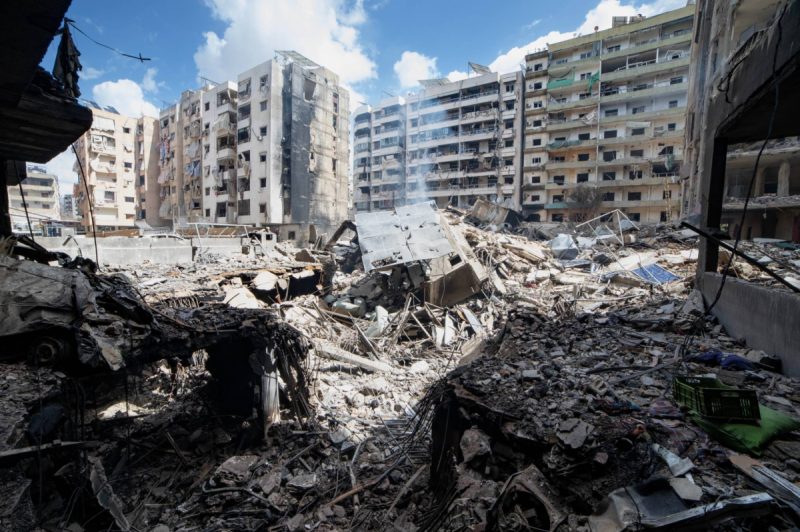
|   | $14,000. That's the most Hezbollah says it will pay a displaced family, in four installments, with no word yet on where the money comes from. Ahla w sahla to a Wednesday where the funding fight splits Lebanon along its usual lines while Israeli strikes keep landing in the south. |
|
| | Hezbollah Puts Numbers on Its Housing PromiseHezbollah finally made the announcement everyone was waiting for. It will pay displaced families up to $14,000 each, in four installments over a year. It still hasn't said where the money comes from or who exactly will get it. - The program is called "Promise and Commitment." Beirut and the southern suburbs get $14,000 ($8,000 furniture, $6,000 rent); everywhere else gets $12,000 ($8,000 furniture, $4,000 rent), per L'Orient Today.
- First installments are $3,500 or $3,000, depending on region. Families with a second home get no rent money, and anyone already paid furniture aid after 2024 gets rent only.
- Executive Council head Ali Damoush gave no total budget and no headcount, Naharnet notes. That's a notable gap, given the party's 2024 pledges were only partly delivered before payments stopped.
- Daamouch also said the program doesn't "replace" the state's duty on reconstruction and shrugged off Washington's claim that the money doesn't exist: "We are not concerned" with what the Americans say.
Why it matters: More than 360,000 people remain displaced, and Washington ties reconstruction money to Hezbollah's disarmament, so every dollar of this program lands in a political fight. Funding Questions Split Lebanon Along Familiar LinesThe money question dominated reactions within hours. Critics want the source of the cash investigated, while supporters say the party is simply doing what the state hasn't. Both camps are insisting the other is exploiting people's suffering. - MP Fouad Makhzoumi urged the government, the central bank, and judicial authorities to verify where the funds came from and how they entered Lebanon, warning that displaced families' suffering shouldn't become cover for "parallel financial systems."
- Last week's Reuters report put $200 million from Iran behind the program, which the US State Department denies. An Al Modon analysis reads the rollout as an attempt to calm anger in Hezbollah's own base and show it survives sanctions.
- Supporters push back hard. Social media filled with posts accusing opponents of attacking the party for paying and attacking it for not paying.
- The delivery route is still unclear. Distribution runs through Hezbollah's own survey committees and regional centers, per Daamouch's briefing, not through any state channel.
The bigger picture: The June 26 framework agreement commits Lebanon to keep reconstruction funds away from armed groups, so a parallel payment network complicates the state's own promises. Update: Israeli Strikes Continue as Aoun Credits the Framework DealIsrael struck south Lebanon four times on Tuesday and issued warnings of more to come. President Joseph Aoun, meanwhile, argued the June framework agreement had at least kept the attacks from spreading. - Israeli forces hit the Hujeir Valley, Kfar Tibnit, and houses near Wadi Saluki and Doubiyeh Castle. They also fired artillery and machine guns across the south, per L'Orient Today.
- Earthmoving near Zawtar al-Sharqiyah has run for more than a week; Israeli forces bulldozed an olive grove and raised an embankment there.
- The strikes came a day after a suspected Hezbollah munition exploded in northern Israel, killing a student and injuring about 30.
- Aoun called the agreement "not ideal" but said it limited the expansion of attacks. Foreign Minister Joe Rajji, in Moscow, said no one negotiates on the Lebanese state's behalf.
What to watch: The new strikes and Israel's continued presence on Lebanese land keep the number of reported Israeli violations climbing. |
|
as of 2:49 AM GMT · Source: Polymarket |
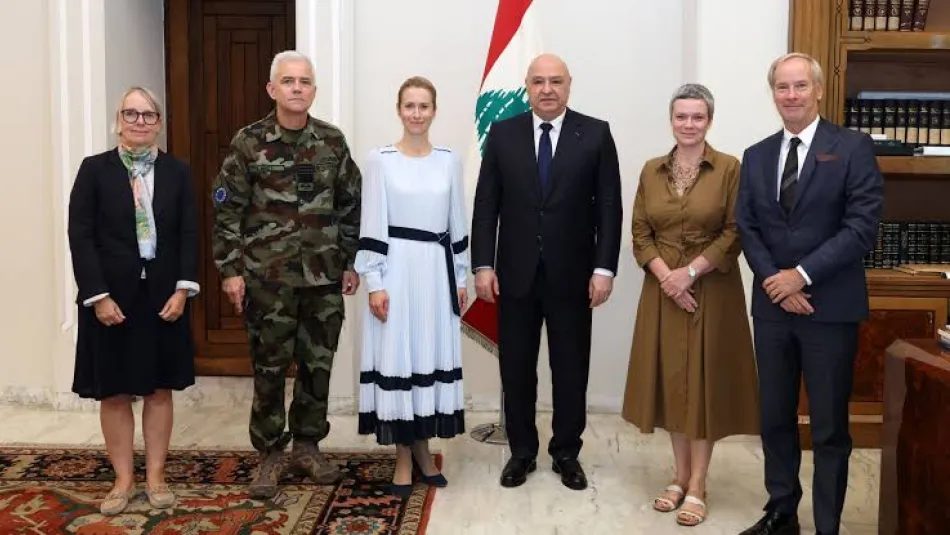
| | - Europe's window seat: The EU created a civilian-military support mission to advise and train the Lebanese Army and Internal Security Forces, with a three-year mandate. No start date, budget or participating countries yet, and the analysis says tasks are expected to cover north of the Litani only.
- Your land registry, now in your pocket: The Directorate General of Land Affairs reactivated its LRC app in Arabic and English. It tracks transactions, estimates fees and alerts owners to any change on their property, from inside or outside Lebanon. Android access is live; the full property page costs a fee.
- One officer, two airports: The government is expanding the Beirut Airport Security Apparatus to cover Qlayaat, so Brigadier General Fadi Kfoury would oversee both, 130 km apart. Shiite ministers had objected to a brand-new apparatus. The airport opens in 35 days, and parliament may still object.
- A $6.2 billion solar tab: The government's own plan prices reaching 5,742 MW of renewables by 2030 at that figure, before batteries. LeBusiness says that means adding roughly 800 MW every year. The regulator's solar-plus-storage window closes October 15, the first hard test of investor appetite.
- Scholarships from the Vatican: Pope Leo XIV will fund school and university tuition for underprivileged Christian children in Lebanon, Syria and Iraq, administered through the Dicastery for the Eastern Churches. The pope said the goal is helping families stay and sustain a Christian presence in the Middle East.
|
|
| ─ | Parallel Rate | 89,550 LBP | 0.00% | | ─ | Official Rate | 89,500 LBP | 0.00% | | ▼ | Gold | $4,185.3 | -0.13% | | ▲ | Bitcoin | $83,198 | +0.70% | | ▼ | S&P 500 | 7,805.45 | -0.08% |
as of 2:34 AM GMT · Source: lbprate, BDL, Yahoo Finance, CoinGecko |
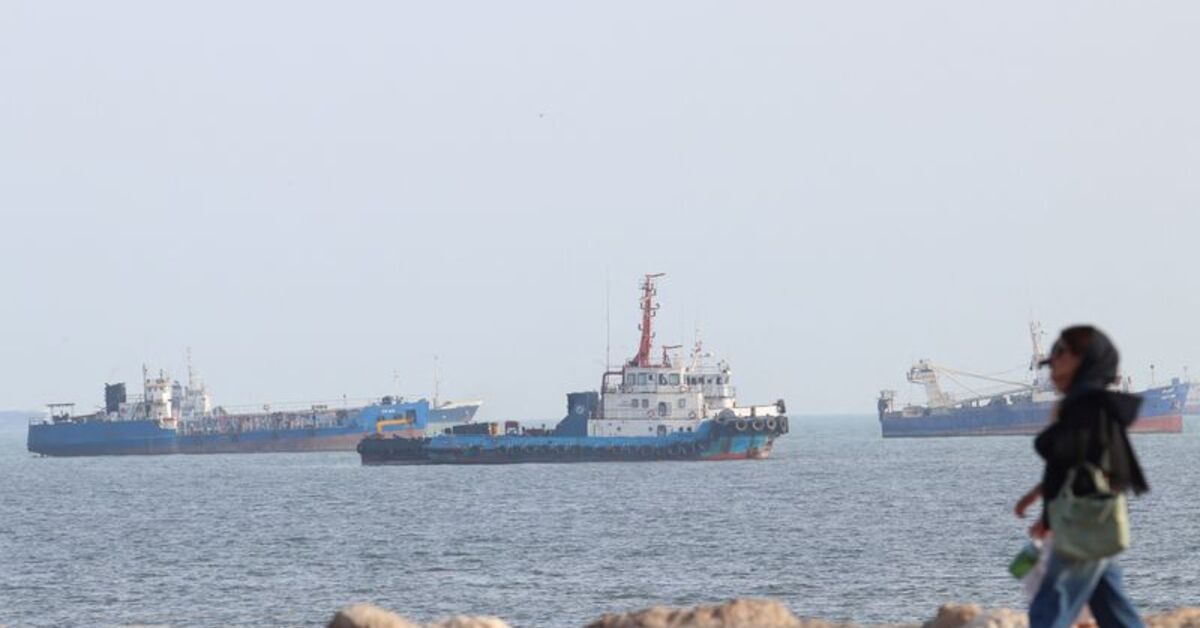
| | Iran Shifts Tactics in the Strait of HormuzIran has changed how it targets ships in the Strait of Hormuz, two senior Iranian officials told Reuters. The strait once carried about a fifth of global oil and liquefied natural gas trade. The officials say the aim is to keep oil prices high before the US midterm elections. - Attacks have surged to their highest level since the war began: at least five incidents in 48 hours, including drone strikes.
- A US military official confirmed one shift. After US strikes wrecked much of Iran's radar, the IRGC now uses unarmed spotters in small boats to find targets.
- The attacks are widening beyond Hormuz, to the Gulf of Oman and waters off Qatar and the UAE.
- One Iranian official said a "complete closure" of the strait is coming for any vessel that breaks Tehran's restrictions.
Why it matters: The war costs the US about $3 billion a month and is now a midterm campaign issue, while oil prices ride on how Tehran and Washington play the next few weeks. Germany's China Caution CracksFor years, Berlin held the EU back from a harder line on Chinese trade practices, fearing retaliation against German exporters. That caution is fading. Chinese imports are now hurting German industry more than exports to China are helping it. - Chancellor Friedrich Merz and French President Emmanuel Macron wrote to the European Commission asking for a tool to cut an unfair trading partner off from the single market. Beijing warned Europe would "suffer the consequences."
- China has slipped from Germany's second-largest export market to its ninth, and German car exports to China fell 66% between 2022 and 2025.
- The EU's goods deficit with China reached about €360 billion last year, roughly €1 billion a day.
- Last week's talks in Beijing produced a "shared understanding" that could cut Chinese hybrid exports to the EU by more than half, per Trade Commissioner Maroš Šefčovič.
What to watch: The EU is a bigger export market for China than the US, which analysts say gives Brussels more leverage than it usually assumes. Germany Puts an Alleged Nord Stream Saboteur on TrialOn September 26, 2022, explosions ripped through three of the four Nord Stream pipelines carrying Russian gas to Germany, seven months into Russia's full-scale invasion of Ukraine. From Wednesday, a Ukrainian man is on trial in Hamburg for it. - Serhii Kuznetsov was arrested in Italy in August 2025 and extradited. He is charged with accomplice to a war crime, disrupting public services, causing an explosion and destroying structures, per DW.
- Zelenskyy has repeatedly denied that Ukraine took part in the attack.
- Germany hosts about 1.3 million Ukrainian refugees. The case lands as the AfD leads national polls and links Ukraine aid to domestic spending cuts.
- Some CDU politicians favor repairing Nord Stream for Russian gas. A DGAP analyst says cheap Russian gas "will never flow again."
The bigger picture: Whatever the verdict, it will land in a German debate already split over Ukraine aid, energy costs and relations with Moscow. |
|
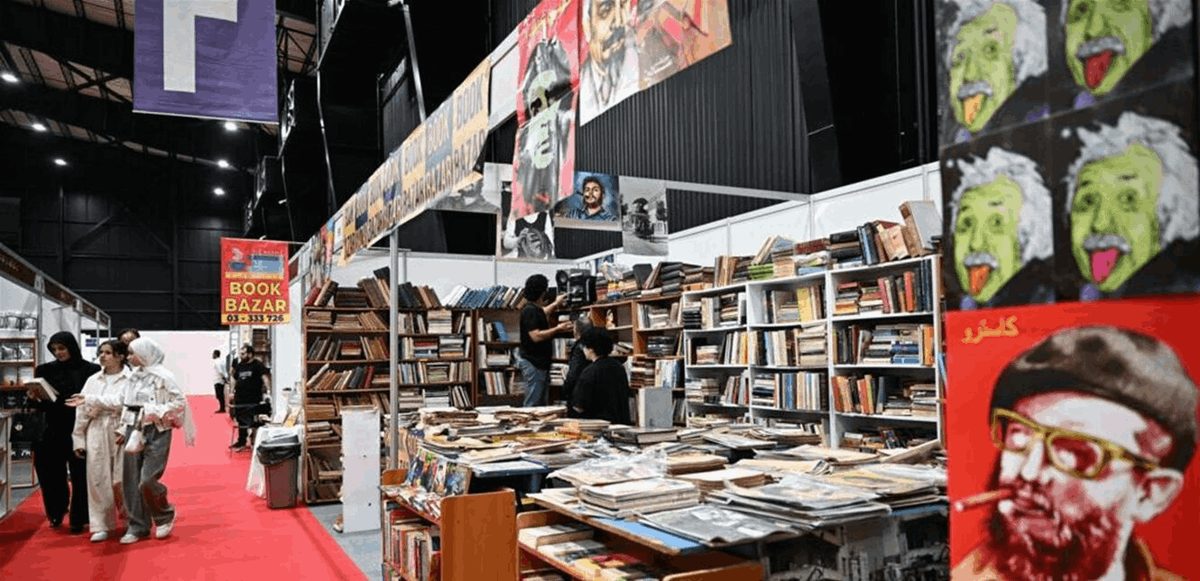
| | - Books beat the scroll: The Beirut Waterfront Book Fair is seeing a rush an academic source says it hasn't had in twenty years, with readers aged 20 to 40 filling the aisles. Politics, stories and especially Lebanese colloquial poetry are selling. The paper book, it seems, is back.
- Three centuries, one foundry: In Beit Chabab, Naffah Naffah and his sons run Lebanon's last church-bell workshop, a family trade dating to the 1700s. Each bell takes about two months, and the foundry turns out roughly 25 a year, mostly for Lebanese churches.
- Libraries get a second chapter: Culture Minister Ghassan Salamé launched a plan from Sin el Fil to rehabilitate about 60 municipal libraries, backed by the Norwegian Embassy and UNESCO. Each gets a needs report, covering books, computers or music lessons, and Bint Jbeil and Taybeh are earmarked for rebuilding.
- Formula 1 finds Africa: Rwanda signed a 10-year deal to host an African Grand Prix from the early 2030s, the continent's first F1 race since 1993. The Bugesera circuit, designed by former driver Alexander Wurz, is planned.
|
|
That's the lot, so before the day gets busy, go ring someone you haven't seen in too long. |
It's an Ottoman-era building. |
Lebanon news, every weekday morning. Free, sharp, ~5 minutes. |
|
|
|
|