|   | Doha showed up with a full electricity plan, a Beirut family finally told its story, and Lebanese people are using AI faster than the world average while the state lags. Marhaba, and welcome to the Monday edition. Pour the coffee first; we've got kilowatts, a four-decade-old disappearance, and a very uneven AI race to get through. |
|
| | Qatar's Electricity Plan Gets SpecificLebanon's grid has been a daily misery for years, draining the state treasury and stalling businesses that run on expensive private generators. Sobhiye readers know Qatar has been circling the problem: QatarEnergy and TotalEnergies agreed to develop a 'massive' solar plant, and PM Nawaf Salam was set to present a Qatari-financed project to the Cabinet. What's new is the detail. According to Assas Media, a Beirut-based outlet, Qatar's prime minister arrived with a full plan drawn up under Emir Tamim.
- The plan covers three tracks: alternative energy, an electrical link with Syria, and gas-fired plants tied to the Qatari gas pipeline that crosses Syrian territory.
- Assas says Qatar's investment in Syria took that country's grid from zero supply to 24 hours a day in under 18 months. That is the track record Doha is bringing to Beirut.
- A Qatari technical team has already spent days with Energy Minister Joe Saddi and his staff. Both sides reportedly agreed to start work immediately once the electricity agreement is signed.
- The visit also touched Qatari support for the army and coordination with Riyadh on UNIFIL (the UN peacekeeping force in the south), plus the verification mechanism for pilot zones inside the Yellow Line.
Why it matters: A signed deal would be the first concrete test of whether Gulf coordination turns into kilowatts, and a chance to ease a burden that has weighed on the treasury and on business for years. A Missing Jewish Leader's Wife, Seen Through Her SonShlomo Djamous, head of Lebanon's small Jewish community, was kidnapped near a Beirut synagogue in 1984 and has never been found. His wife Miri has now died, and her son Moshe has given Israel's Yedioth Ahronoth newspaper an account of her life, including roles she never publicly discussed. The story resurfaces because the fate of missing Jews has been raised in the US-sponsored Lebanese-Israeli negotiations.
- Moshe says his mother was born in Damascus and moved at night as a nurse, helping smuggle Jewish girls to Israel, which implies coordination with the Mossad, per the newspaper's reading.
- She was arrested twice in Syria, then fled to Lebanon, where she married Shlomo in 1975, in the middle of the civil war. They had three sons.
- In October 1986, after a call from his father's kidnappers asking for the eldest son in exchange, Miri smuggled two sons to Israel.
- She moved to Israel in 1989. Moshe says his mother met Israel's prisoners-and-missing-persons coordinator, Gal Hirsch, several times. The family knows what was discussed in the talks about his father, one of 12 missing Jews.
The bigger picture: A four-decade-old disappearance has returned to the negotiating table, and Yedioth Ahronoth itself could not answer who let Miri phone her sons from Lebanon. Lebanon's AI Paradox: Many Users, Slow StateLebanon's people are adopting generative AI faster than the world average, while its government is among the slowest to put the technology to work. That gap shows up in two sets of figures: Microsoft's usage data, which counts how many working-age people use AI tools, and Oxford Insights' index, which ranks how ready each government is to use AI in public services. They measure different things, but together they show where Lebanon is ahead and where it is stuck.
- Microsoft's AI Economy Institute found 27.3% of Lebanon's working-age population used generative AI in Q1 2026, up from 25.7% in late 2025 and 24.8% in early 2025.
- The global rate was 18.8% in Q2 2026. The gap is wide between the Global North (28.8%) and Global South (16.2%), which puts Lebanon's number in context.
- Oxford Insights ranks Lebanon 113th of 195 governments, scoring 34.38 out of 100. That puts it 14th in the Middle East and North Africa.
- Public-sector adoption is Lebanon's weakest axis at 18.65 points. Saudi Arabia leads the region, ranking 15th globally.
Zooming out: The two indexes measure different things, individual use versus government readiness, so the real gap is in infrastructure, skills, and public policy rather than in headcount. |
|
as of 2:16 AM GMT · Source: Polymarket |
What does "mshabra7" describe? | Someone confused/disheveled |
| | | |
Scroll to the bottom for the answer — or play all 10 at sobhiye.news/games/trivia |
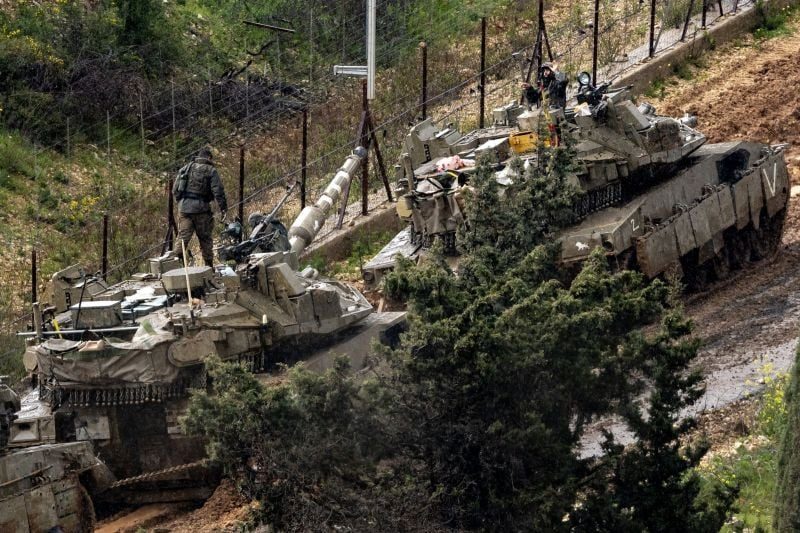
| | - Netanyahu's open-ended lease: Israel's prime minister says troops stay in the southern "security zone" until Hezbollah is disarmed, adding "I don't trust" Beirut to do it. This follows our reporting that an Israeli military source predicted no withdrawal for years.
- Rajji's Baghdad message: At the 52nd Organisation of Islamic Cooperation foreign ministers' meeting in Iraq, Lebanon's foreign minister urged Iran and its proxies to halt attacks on Gulf states and Jordan, and said the Cabinet's August 2025 decision puts weapons solely in state hands.
- Beirut airport's missing paperwork: The UN's civil aviation agency, ICAO, found the airport lacks valid certification, L'Orient Today confirmed. Transport Minister Fayez Rasamny promised corrective measures within days. The outlet stresses it doesn't automatically mean closure or grounded airlines.
- Rasamny's revenue roadmap: Beirut port handles about 1.2 million containers yearly and targets 2.8 million. Kleyat airport expects its first commercial flights by mid-November. Rasamny blamed a four-year cap on concessions, an 85% public-sector vacancy rate and decades-old laws.
- Professors keep striking: The contract professors' committee at the Lebanese University says the strike continues across all branches. They want the full-time appointments file approved at the next Cabinet session, with the President attending, and are urging a sit-in outside.
|
|
| ─ | Parallel Rate | 89,550 LBP | 0.00% | | ─ | Official Rate | 89,500 LBP | 0.00% | | ▲ | Gold | $4,193 | +0.28% | | ▲ | Bitcoin | $82,436 | +0.98% | | ▼ | S&P 500 | 7,659.44 | -0.77% |
as of 1:58 AM GMT · Source: lbprate, BDL, Yahoo Finance, CoinGecko |
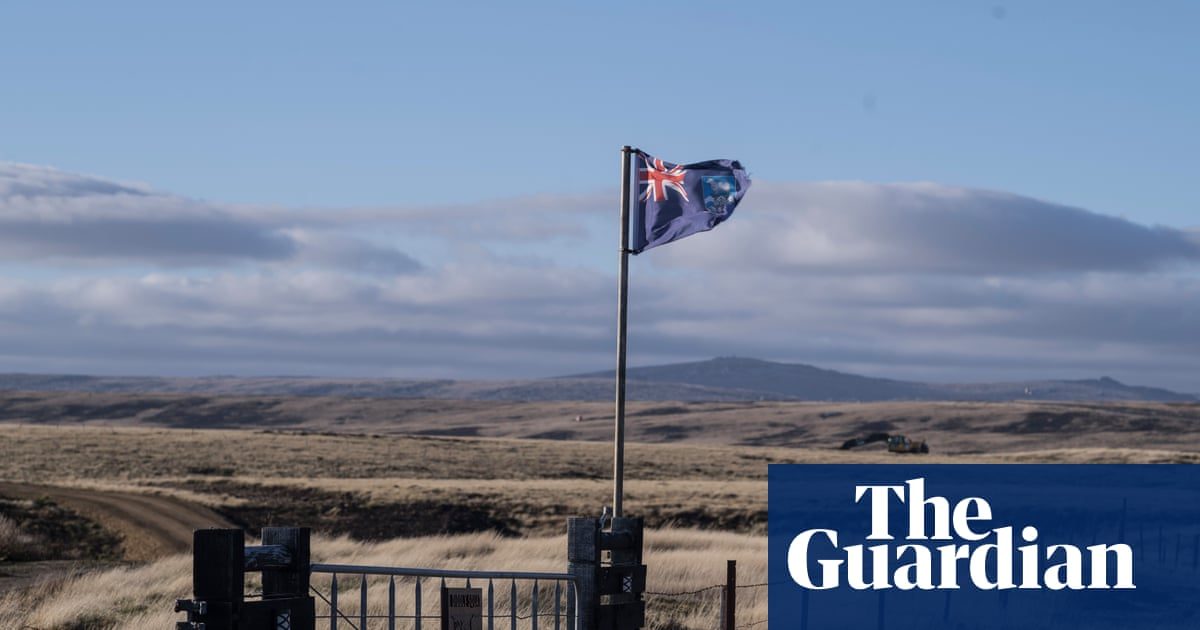
| | Falklands Face an Economic Squeeze From Buenos AiresForty-four years after Argentina invaded the Falkland Islands (the British-held south Atlantic archipelago it calls Las Malvinas) and lost the 1982 war, Buenos Aires is back with a different weapon: economics. The war killed 649 Argentinians, 255 British personnel and three islanders. Now President Javier Milei, polling poorly at home, has legislated to criminalise companies and individuals involved in the islands' young oil industry, according to The Guardian. He has also suggested the fisheries could be next. With British forces on the islands, a military threat is largely hypothetical, so this fight is about money.
- The islands' wealth rests on squid. A 200-nautical-mile fishing zone, created in 1986, lets the islands license foreign fleets, and GDP per capita rose from about £2,000 in 1982 to £85,000 in 2025.
- The Sea Lion oil project, about 136 miles north of the islands, could triple GDP, independent estimates suggest. Two major contractors have recently pulled out under Argentine pressure.
- UK Foreign Secretary Ed Miliband restated solidarity with the islanders and promised protective legislation. Interpol also received UK representations urging it to reject an Argentine arrest request tied to the dispute.
- Population is about 3,600, up from 1,800 four decades ago. Government chief executive Andrea Clausen says the islands have been financially independent since 1982, except for defence. The oil is their insurance.
What to watch: Drilling is expected to start within months, so the test is whether contractors return as London's promised legislation takes shape. Trump Waives Russia Sanctions; Zelenskyy Warns of Lost SupportPresident Trump signed an order on Friday waiving broad new Russia sanctions that Congress mandated through legislation named for the late Senator Lindsey Graham, a staunch backer of Ukraine. He also temporarily waived sanctions on Russian diesel so supplies can flow into global markets. The reason is fuel prices, which have surged since the Iran war began in late February, with US midterms due on November 3. Ukraine's president says Kyiv cannot prevail if Washington sides with Moscow.
- Trump wrote on Truth Social that he is negotiating peace and does not want to "foolishly" drive Russia away from the bargaining table. He also accused Zelenskyy of never wanting to end the war.
- Most economists believe the waivers will do little to lower US fuel prices, per DW. Republicans face possible heavy midterm losses as voters grumble about pump prices.
- Zelenskyy told NBC the US had resumed intelligence sharing after a pause. Ukraine missed ballistic-missile attack data for three days.
- He says Russia violated Trump's "energy ceasefire" 76 times, and Russian strikes left "tens of thousands" without power. A Ukrainian drone attack set a refinery near Saint Petersburg ablaze.
Why it matters: Washington's fuel needs and its Ukraine diplomacy are now linked, with a pre-election gas-price squeeze on one side and Kyiv's winter power supply on the other. France's Socialists Pick Glucksmann, and a ProblemFrench Socialists have chosen Raphaël Glucksmann, a center-left member of the European Parliament and the son of philosopher André Glucksmann, as their 2027 presidential candidate. He won the party's October 11 primary outright with 66%, on a promise to break cleanly with far-left populist Jean-Luc Mélenchon, whose party, La France Insoumise (LFI), dominates young voters. That makes his path to the presidency harder: the Socialists have to win back the left without the left's strongest figure.
- Glucksmann belongs to a small party, Place Publique, not the Socialists. A poll taken before his win put him at 10-11%, against 18% for Mélenchon.
- An Ipsos survey found Mélenchon at 41% among under-25s, with the far right's Marine Le Pen at 20%. The Socialists' 2022 candidate managed only 1.75%.
- As he left his victory party, Glucksmann was flour-bombed by an unidentified assailant. It is unclear whether the attacker backed LFI, though he later urged Mélenchon to condemn such attacks.
- He backs firm Ukraine support, a lower CSG social security tax and higher taxes on inheritances above €2 million. LFI backs Ukraine aid only under conditions.
Zooming out: Winning over Mélenchon's voters while refusing to work with him is the puzzle the primary's winner now has to solve. |
|
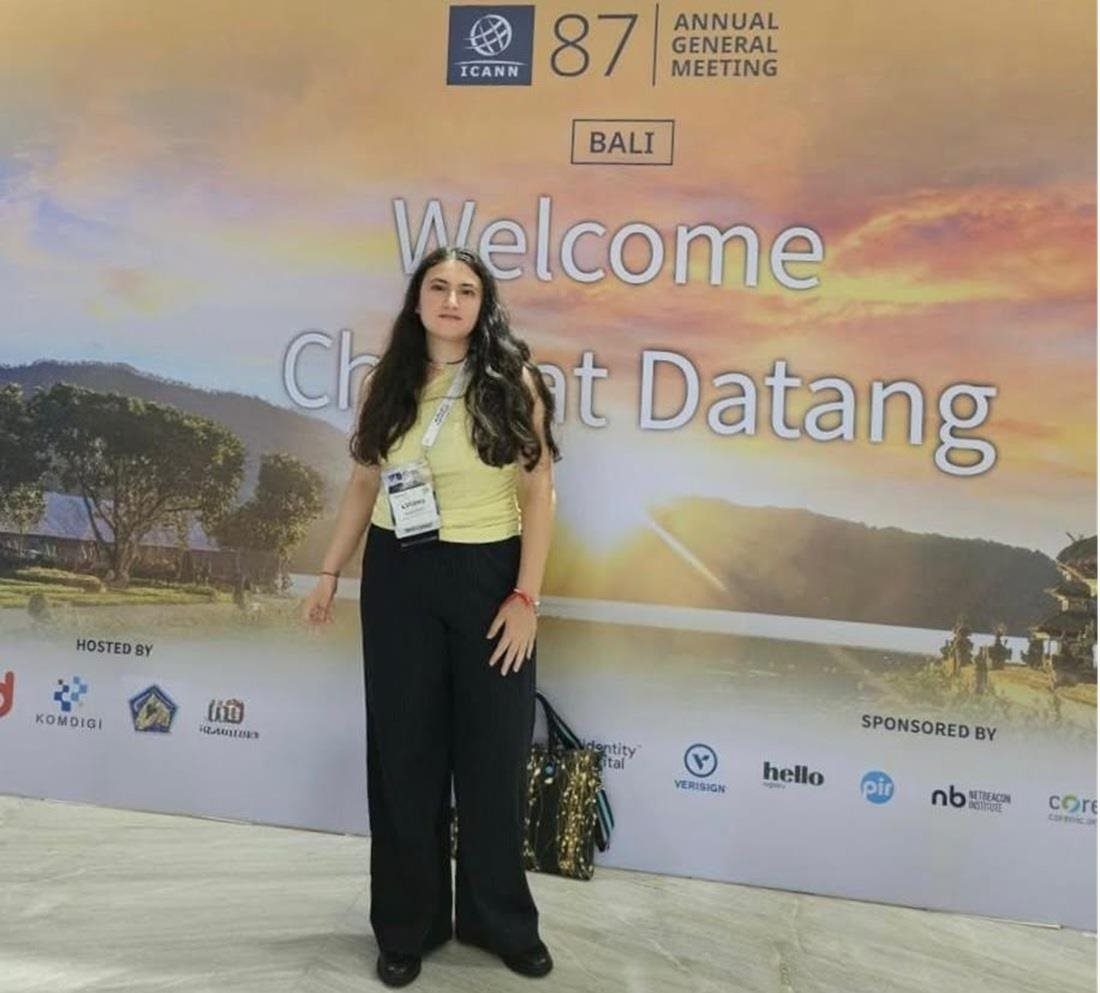
| | - Loulwa goes to Bali: Lebanese American University bioinformatics senior Loulwa Ramadan is the first Lebanese woman in the ICANN NextGen program, at its 87th meeting in Bali. Chosen from hundreds of applicants, she is the only participant from Lebanon or the Middle East this year, and she'll present her work on detecting fraudulent domain names.
- Beirut's bookish week: The 67th Beirut Arab International Book Fair, which we flagged as the Ghassan Tueni centenary edition, drew crowds to its seminars. One session tallied 73 Lebanese heritage sites threatened in conflict, and noted six southern castles now on the World Heritage List.
- Apu finds his voice: Nearly a decade after he last spoke on The Simpsons, Apu is back in the Halloween episode "The Revengening," now voiced by Sunil Malhotra. Janina Gavankar debuts as his wife Manjula, and the show's producers say the family will appear more often.
- Gillespie goes back-to-back: Ireland's Lara Gillespie is world champion again, dominating the points race on the final day of the UCI World Track Championships in China, her second straight world title. BBC Sport's headline put it simply: "What a finish!"
|
|
Yalla, off you go, and if you pass a bookshop today, give it ten minutes. |
| ✓A. Someone confused/disheveled |
Mshabra7 describes someone who is confused, scattered, or disheveled. |
Lebanon news, every weekday morning. Free, sharp, ~5 minutes. |
|
|
|
|