|   | Thirty-seven years after Taif, five business chiefs, six students, and one inflation table all land on the same word: enforcement. Ahlan, and settle in with your coffee, because the Bekaa is paying roughly 70% more than Beirut in price hikes while the next generation checks flight options. |
|
| | Lebanon's economy, 37 years after TaifThe Taif Agreement, the 1989 deal that ended Lebanon's civil war and rewrote the power-sharing formula, turned 37 this week. Annahar asked five heads of business groups what the economy needs now, and their answers share one thread: the state has to function before anything else can.
- Mohammad Choucair, president of the Lebanese Economic Bodies, ties recovery to implementing Taif, placing weapons under state authority, and repairing relations with Gulf countries that drive trade, tourism and investment.
- Banker Saad Azhari says a clear law on old, non-fresh deposits is the missing piece. He points to expectations that it could pass in early 2027, alongside new powers for Banque du Liban to address the financial gap.
- Wassim Daher, chairman of Azadea Group, names four pillars: judicial independence, merit-based hiring, digitized government services, and transparent oil and gas management.
- Industry and tourism leaders land in the same place. Salim Zeenni wants a strong state, and Jean Abboud wants lasting peace and a confrontation with the "deep state" of monopolies and vested interests.
Why it matters: Five different sectors, one shared diagnosis: the obstacle is enforcement and trust, not a shortage of reform ideas. What Lebanon's students say would fix itIf the business leaders speak for the present, Annahar's second Taif-anniversary piece asks the generation that inherits the outcome. Six students from different universities gave answers ranging from legal reform to emigration, which is its own kind of verdict on how the last 37 years went.
- Hadi Ghanem, a private-law graduate, wants judicial independence, oversight of public institutions, and enforcement of laws already on the books.
- Tima Hamdan, a journalism student, calls for implementing Taif on a clear timeline, with competence replacing sectarian and partisan interests in public service.
- Joy Samaha wants state-only control of military decisions and a deal with Israel that respects borders without normalization.
- Charbel Hasna sees little hope and plans to emigrate. Change, he says, could take generations.
The bigger picture: The students split between reform that is possible and a country they expect to leave, and that gap is the story of Taif's unfinished business. Bekaa pays more as prices climbLebanon's headline inflation hides a wide regional gap. Prices are rising much faster in the Bekaa, far from the port and distribution centers, than in Beirut, which matters for any wage or aid scheme built on a single national average.
- Annual inflation hit 16.66% in August, per the Central Administration of Statistics, and the national average rose to 17.5% in September.
- Beirut saw just 11.98%. The Bekaa reached 20.51%, Nabatieh 18.52%, and the South 15.10%.
- A Bekaa resident bore an increase roughly 70% higher than a Beirut counterpart's.
- Transport costs rose about 31.7% in August and 35.2% in September, and they feed into goods prices the farther a region is from the port.
What to watch: Any wage adjustment or support program pegged to one national figure would land very differently in Beirut than in the periphery. |
|
as of 2:35 AM GMT · Source: Polymarket |
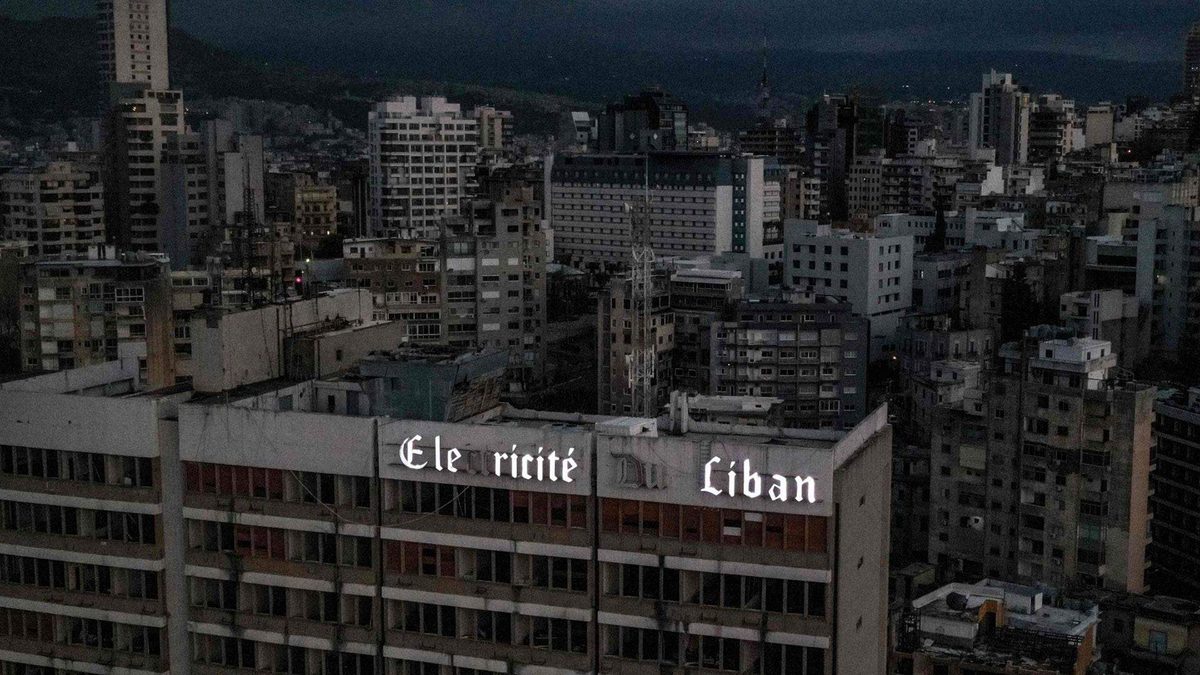
| | - Lights out for the state: Electricité du Liban, the national power utility, will cut electricity to public administrations, institutions and independent agencies, including water utilities, that haven't paid their bills. The cuts start Monday, Nov. 2, 2026. Government hospitals are exempt.
- Three lives, one harvest: A third olive-season death since our earlier report: Edgar Jilou, killed in Ain Ebel by unexploded Israeli ordnance, alongside the Froun and Yater deaths. The agriculture ministry says 56,000 hectares, 22.5% of farmland in conflict zones, have been hit by Israeli violations.
- Washington says no Berri plan: After analyst Elijah Magnier posted that Iran rejected a Berri-backed US-Turkey plan, State Department spokesman Tommy Pigott denied any such proposal. He also denied any US-backed change to the Taif structure, and restated the trilateral framework's goal of disarming Hezbollah.
- Doctors in the pipeline: A program launched in Beirut will train Gaza's doctors in Lebanon and Turkey, after 1,691 health workers were killed by Israel. Lebanon's track aims to support up to 15 residents over five years, while Turkey's targets up to 500.
- Counting the "returns": Displacement in the South peaked near 1.2 million people by April 2026, and the UN refugee agency says at least 880,000 are returning. An Assafir Al-Arabi analysis argues many went to areas near their villages, or to host communities in the North and Bekaa, so displacement changed shape rather than ended.
|
|
| ─ | Parallel Rate | 89,550 LBP | 0.00% | | ─ | Official Rate | 89,500 LBP | 0.00% | | ▼ | Gold | $4,010 | -1.24% | | ▼ | Bitcoin | $80,822 | -0.61% | | ▼ | S&P 500 | 7,623.68 | -1.72% |
as of 2:19 AM GMT · Source: lbprate, BDL, Yahoo Finance, CoinGecko |
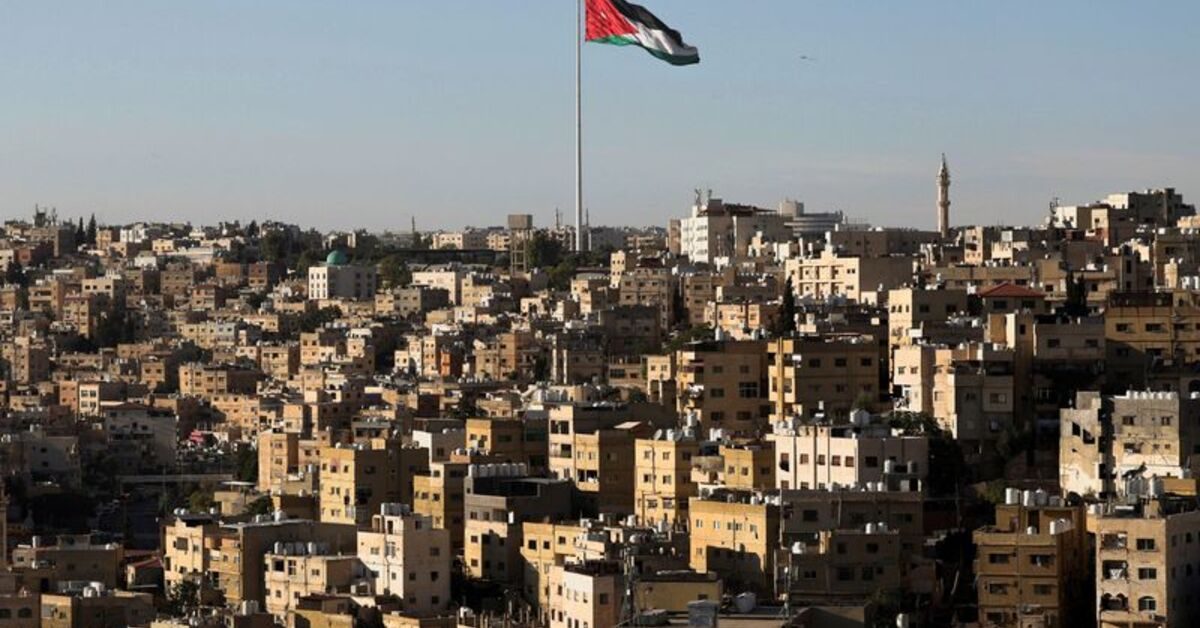
| | Gunmen hit a funeral at a Jordanian churchSeven people were killed Friday when gunmen opened fire during a funeral at the Hamoud Church in Karak governorate, southern Jordan. Authorities called it a terrorist attack by extremists. Attacks on Jordan's Christian minority are extremely rare, and the country, a US ally, is relatively stable, though officials say they have repeatedly foiled Islamist plots in recent years.
- Jordan's health minister said 40 people were wounded. Public Security chief Major General Obaidallah Al-Maaytah said most were still being treated and the hunt for the attackers continues.
- State TV video, verified by Reuters, appears to show three people firing from a sidewalk, sheltering behind trees and a low wall, then running toward the church entrance. A witness said the gunmen fired for several minutes on dozens of mourners.
- Interior Minister Mazin Al-Farrayeh blamed "extremists" but said it's too early to link them to any known group, inside or outside Jordan. No one has claimed responsibility.
- King Abdullah visited Karak hours later and promised punishment "with an iron fist." UN Secretary-General António Guterres condemned the attack.
What to watch: Investigators have yet to say who the attackers were or whether they acted alone, and until they do, the motive stays an open question. Starlink, Washington and the on/off switchStarlink, Elon Musk's satellite internet service, is vital to Ukraine's military. Earlier this month, as we reported, Ukrainian units hit disruptions that hampered their drones, and who ordered the limits stayed unclear. Reuters now reports that US administrations have for years asked SpaceX, Musk's company, to switch Starlink on or off in specific countries to serve foreign policy goals.
- Six former senior US officials told Reuters the Biden and Trump administrations both made such requests. Reuters is reporting the earlier ones for the first time.
- Biden officials shared intelligence that diverted terminals had reached Hezbollah and the Houthis in Yemen, then asked SpaceX to identify and shut them off. At least some were deactivated, per two officials.
- The Biden administration asked SpaceX to turn on Starlink in Iran during the protest movement launched in 2022, and the Trump administration took a similar step following the US-Israeli strikes in 2025 and 2026.
- Musk wrote this week that Starshield, the military version, is "owned and controlled by the US government" and that limits are set by the military and the president. The White House referred Reuters to Trump's remark that "if there is a problem, I'll get it straightened out."
Zooming out: The reporting shows Washington leaning on one private company to carry out foreign policy, and officials in Europe are now asking whether they can afford that dependence. India caps cancer drug prices after a patient's lawsuitStarting next month, 137 cancer drugs will be cheaper in India, after a retired bank clerk's court petition pushed the Supreme Court to examine what hospitals and pharmacies charge. In a country where illness can mean financial ruin, many families walk out of the doctor's office rather than start treatment they can't pay for. She didn't live to see the result.
- Sarojam Radhakrishnan of Kerala was diagnosed with breast cancer in 2021. Her treatment cost more than 63,000 rupees (about £500) a month, and she petitioned the Kerala high court in 2022.
- Justices Vikram Nath and Sandeep Mehta called the markups "extortion." One drug supplied to hospitals at 2,700 rupees was marked up to 27,000.
- The National Pharmaceutical Pricing Authority, the national price regulator, found trade markups averaging 170% on some cancer drugs, with extremes above 700%. The new cap limits trade margins to 30%, a limit that already covered 42 other drugs.
- Radhakrishnan died in September 2022, before her case was decided.
Why it matters: The government expects the cap to cut prices by up to 70%, but the court has asked why it covers only cancer drugs, with a reply due October 27. |
|
| | - Lebanese space cadet: AUB graduate Fadi Kanaan was picked from about 400 applicants for the Asclepius 7 crew, a Swiss student mission simulating a lunar expedition. He's the first Lebanese and the only Arab in this cohort, and enters isolation in summer 2027.
- A street for Najah: Beirut named a street after the late singer Najah Salam, near Maqassed Club in Mazraa. Prime Minister Nawaf Salam's wife, Sahar Baasiri Salam, unveiled the sign, honoring the voice behind the patriotic anthem "Ya Ahla Ism fi al-Wujud, Ya Lubnan."
- Beirut disco, rediscovered: Habibi Funk, the archival label, compiled Beirut City Pop, spotlighting musicians who played soul, disco and jazz through the civil war. Highlights include Stephanie Stephanou's funk groove "You Turn Me On" and Abboud Saadi's synth-rock band Force.
- Kane's big London night: Bayern striker Harry Kane, 33, is the bookies' favorite for Monday's Ballon d'Or ceremony in his hometown, London. He scored 73 goals this season, second only to Messi's 82, and says he's "trying not to think about it."
|
|
Go enjoy your Saturday, and make the first coffee a slow one. |
Ejjeh is an herb and eggfrittata. |
Lebanon news, every weekday morning. Free, sharp, ~5 minutes. |
|
|
|
|