|   | Three different roads out of the same stalemate, and none of them runs through Beirut. Washington is sketching a post-UNIFIL plan, Israel's election has Lebanese officials running the numbers, and everyone is guessing who Iran is rooting for. Shou el akhbar? Mostly that Lebanon is waiting on other people's decisions. |
|
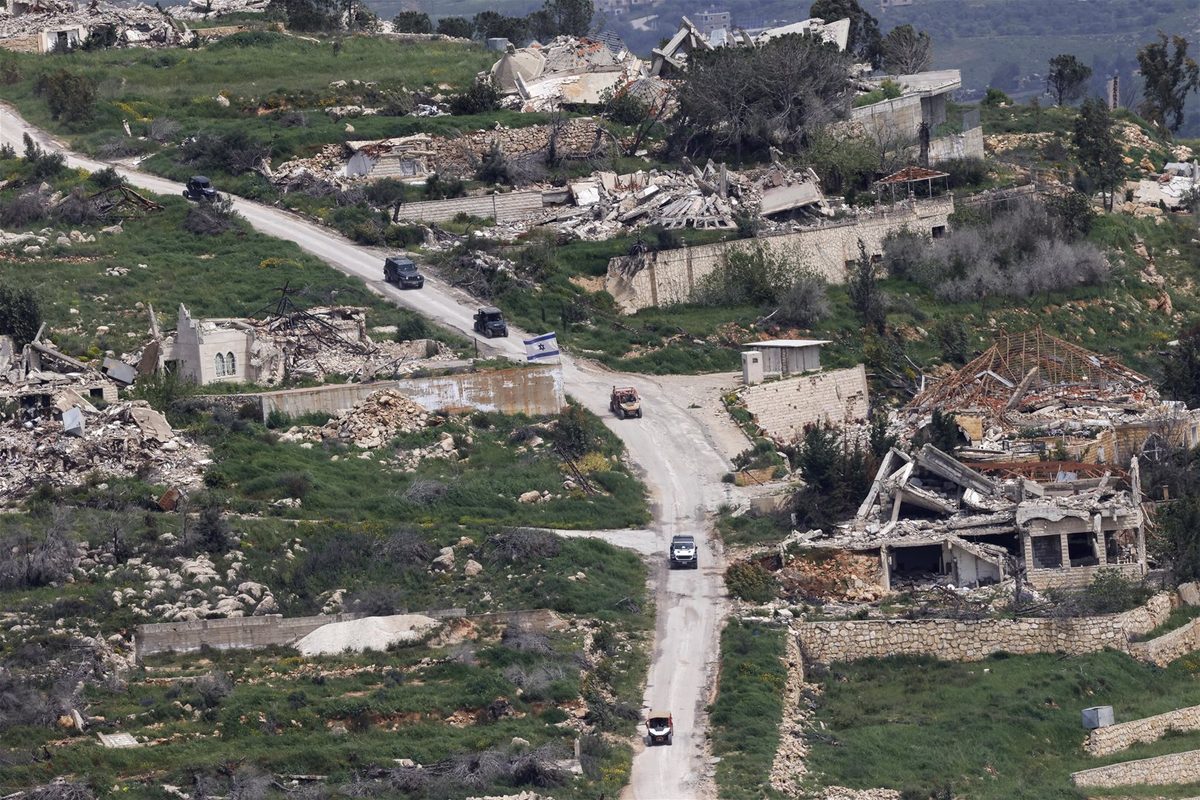
| | Washington Floats a Post-UNIFIL Plan for the SouthThe Emirati outlet Erem News reports that Washington is drafting a roadmap to replace the international military presence in South Lebanon with joint Lebanese-Israeli army patrols along the "Yellow Line." We reported earlier that military-technical talks in Tampa failed over an Israeli demand for a joint committee. The UN peacekeeping force, UNIFIL, expires on December 31, 2026, and nothing official has been announced. - The roadmap is credited to US General Joseph Clearfield, head of the "Mechanism," the committee that monitors the ceasefire. It may give Israel a direct role in security arrangements inside Lebanese territory, according to Lebanese political sources.
- Lebanon has so far refused direct field coordination between the two armies. Officials told The National on October 19 that Beirut insists on an American mediator and a third party to verify commitments.
- No geographic scope, mechanism or date has been given. It's unclear whether this is a formal proposal to Beirut or still a discussion in Washington.
- Retired Brigadier General Khaled Hamadeh warns that Israel could expand its deployment as UNIFIL leaves, possibly creating a new security strip and restricting residents' movement.
What to watch: Beirut ties any security understanding to Israeli withdrawal, so the question is whether it will accept a formula that skips an international force altogether. Eisenkot's Possible Win Gets a Lebanese ReadingIsrael's election took place on October 27, and Gadi Eisenkot, a former army chief of staff, was Benjamin Netanyahu's main challenger. Our earlier coverage noted he has stayed vague on a two-state solution. Lebanese officials are weighing what an Eisenkot government would mean for talks that have stalled since the "framework agreement," the document that was meant to guide Lebanon-Israel negotiations. - Lebanese official circles see an Eisenkot win as preferable, according to Annahar. The appeal is a different approach to managing the war and its limits, not a softer line on Lebanon.
- Israeli analyses cited by The Jerusalem Post suggest he could restore France to a more active role, opening a diplomatic window as Washington hesitates to get involved on the ground.
- The caveat: his public positions show no fundamental departure from Netanyahu's security goals. Both favor a security zone in southern Lebanon and tie withdrawal to pushing Hezbollah away from the border.
- Eisenkot has criticized Netanyahu's war handling for lacking clear, achievable political objectives.
Why it matters: Lebanon is waiting on Israel's government-formation process to restart talks, and the realistic gain looks like a change in style and in who sits at the table, not in terms. Who Holds the Cards as Regional Tensions EscalateAnnahar, one of Lebanon's oldest daily newspapers, runs an opinion column arguing that Iran is positioned to benefit as the Israeli election just held and the US midterms (due next week) could pressure Benjamin Netanyahu and Donald Trump. The column's real question is what that means for Lebanon, where the government backs US-led diplomacy while Hezbollah, the Iran-backed armed party, bets on Iran's leverage. That split matters because the negotiations Beirut has invested in, including the latest talks in Tampa, have produced nothing so far. - The column argues the US-led track has disappointed: repeated negotiation rounds, including the latest in Tampa, have yielded nothing and stripped the framework agreement, the document meant to guide Lebanon-Israel talks, of the momentum Lebanon needs.
- Diplomatic sources say more than a year and a half after the state began reclaiming control, it still seeks domestic guarantees against being dragged into a third war. In the column's reading, decisions of war and peace remain outside its hands.
- The column adds that Iran is unlikely to open a new front from Lebanon, since that would risk further weakening Hezbollah, but the debate itself signals Iran's say in Lebanese affairs, even as authorities insist they speak for Lebanon.
- Regional governments are meanwhile working to contain the conflict, including a Mecca Agreement delegation's visit to Tehran. Any breakthrough still depends on Iranian flexibility and genuine US acceptance.
The bigger picture: Lebanon's choice between a US bet and an Iranian one is being decided largely by outcomes in Washington, Tel Aviv and Tehran, not Beirut. |
|
as of 3:29 AM GMT · Source: Polymarket |
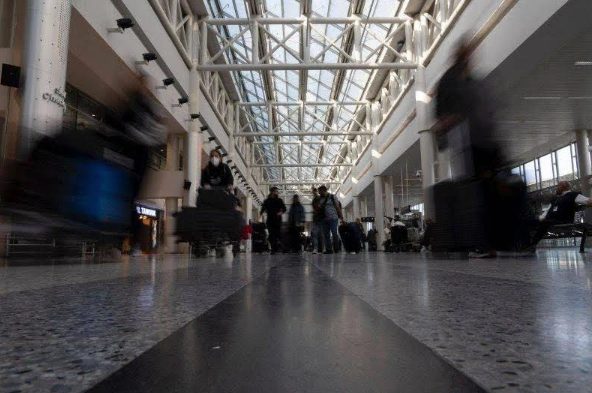
| | - Airport runs on generators: Beirut's airport has had no public-grid power since Wednesday morning, and management says Electricité du Liban (EDL), the state utility, offered promises but no explanation. This lands as EDL chases more than $200 million in unpaid public bills and prepares to cut institutions on November 2.
- Jumblatt vs. the State Department: After a US spokesman accused Druze leader Walid Jumblatt of disregarding principle, he told L'Orient-Le Jour that neither Parliament nor Cabinet was consulted on the framework deal with Israel. Hezbollah MP Ali Ammar called the US remarks brazen interference.
- Qassem reads the Israeli vote: Hezbollah chief Naim Qassem called Israel's election results a form of defeat and rejected disarmament talks while occupation and attacks continue. He called the framework agreement unconstitutional and urged the Lebanese army to deploy south of the Litani River.
- The 5,000-tree promise: Lebanese Forces MP Razi al-Hajj announced a plan to plant 5,000 trees near the Jdeideh landfill, now 36 meters high, with no timeline. A source says reforestation can't start until a year after the site closes, scheduled for April 2027.
- A line without a queue: Alfa, one of Lebanon's two mobile operators, now lets Lebanese at home or abroad buy prepaid or mobile broadband lines online, activated as an eSIM within minutes. All it takes is a Lebanese ID or passport, scanned and matched by facial recognition.
|
|
| ─ | Parallel Rate | 89,500 LBP | 0.00% | | ─ | Official Rate | 89,500 LBP | 0.00% | | ▼ | Gold | $4,055 | -0.48% | | ▼ | Bitcoin | $79,832 | -1.24% | | ▲ | S&P 500 | 7,743.98 | +0.88% |
as of 3:13 AM GMT · Source: lbprate, BDL, Yahoo Finance, CoinGecko |
| Gulf States Draft a Multipart Plan to Head Off a Renewed US-Iran WarGulf states are working on a multipart peace deal to avert a renewed war between the US and Iran, a conflict that has disrupted shipping through the Strait of Hormuz, the narrow waterway that carries much of the region's oil. The Guardian reports the plan pairs reopening the strait with lifted sanctions and a pullback by the Houthis, Iran's allies in Yemen. Gulf governments regard a return to war as disastrous. - Iran's deputy national security council secretary, Ali Bagheri, said Tehran would cut its proposed timeline for reopening the strait from seven days after sanctions are lifted to four.
- Washington is aware of the talks' progress but is holding out for a concession. European diplomats say that could mean readmitting UN weapons inspectors to Iran's bombed nuclear sites, which Iran has so far refused, offering only talks in principle on its nuclear program.
- Iran's security council secretary met the Houthi ambassador to Iran on Tuesday, a day after delegates from Saudi Arabia, Turkey and Pakistan visited Tehran to discuss terms for ending the Yemen conflict.
- Oman's foreign minister, Badr Albusaidi, backs a regional security architecture in which Iran sits at peace with its Gulf neighbors, and says Washington understands that is where the region is heading.
What to watch: Whether Iran's flexibility on timing extends to the inspectors question, since European diplomats call that the minimum for a breakthrough with President Trump. Russian Satellites Tracked Over Saudi Targets Before Strikes, Study SaysA Geneva-based private intelligence firm, AURORAH Geosignal Intelligence, says Russian government satellites gathered over Saudi oil and military sites days before and after attacks by Iran-backed groups. Russia is believed to be helping Iran's allies target Saudi infrastructure in strikes that have helped push up global energy prices, according to a report carried by Naharnet. Russian officials had no immediate comment, and the firm did not intercept actual intelligence transmissions. - AURORAH examined 40 missile and drone attacks by Yemen's Houthis and Iraqi militias between July 1 and October 19. Founder Nawaf Obaid told the AP it found a 100% match with Russian satellite activity over the targets.
- On September 10, drones struck three pumping stations on Saudi Arabia's 1,200-kilometer East-West Pipeline, an alternative export route for the kingdom's crude amid Iran's attacks on Hormuz shipping.
- A week later, a strike on King Fahd Air Base in Taif damaged an Italian Eurofighter, not the Saudi jets stationed there.
- Saudi deputy minister Rayed Krimly said Iran and the Houthis get intelligence from "elements in Russia and China, even commercial elements sometimes."
Zooming out: Analysts quoted in the report note there is only a general policy and no regulatory body governing satellite surveillance, which complicates any response to the allegations. Arab Parties Surge in Israel's Election, Eyeing a Kingmaker RoleExit polls after Israel's October 27 election point to a record showing for Arab parties, who represent about 20% of the population and could tip coalition talks. Final results are still pending. This is the vote in which challenger Gadi Eisenkot, a former army chief of staff, faced Prime Minister Benjamin Netanyahu, as we covered earlier. Arab citizens, mostly descendants of Palestinians who stayed after the 1948 war, have long sat out elections over disagreements including Israel's nature as a Jewish state. - Per Channel 14, with 37% of votes counted, Netanyahu's bloc led with 57 seats, against 47 for Eisenkot's Yashar party and 16 for the Arab lists, according to Annahar.
- The two strong performers are the socially conservative United Arab List (Ra'am) and the left-wing Joint List.
- Ra'am leader Mansour Abbas said turnout turned Arab voters' "frustration and despair" into hope, and that his priority is giving a chance to form a government that replaces Netanyahu's.
- Only Ra'am has joined a government before: the short-lived 2021 coalition led by Prime Minister Naftali Bennett. Its participation angered many right-wing voters, and relying on Arab lawmakers remains divisive among some Jewish groups.
Why it matters: If the count holds, coalition arithmetic could depend on whether parties on either side are willing to rely on Arab lawmakers' votes. |
|
| - Cheika's cedar flag: Australian coach Michael Cheika, born to Lebanese migrants who left in 1950, calls Sunday's Rugby League World Cup match against France Lebanon's "Grand Final." He says relatives back home are watching, and few chances come to support their flag on a world stage.
- A café that built Hamra: Al Modon traces how The Horse Shoe, a sidewalk café opened on Hamra Street in 1959, became a meeting point for poets, painters, journalists and directors. Fairuz passed by during her Piccadilly shows. Even a banned play found a two-hour home there.
- Maronites down under: Bishop Antoine Charbel Tarabay told Patriarch Bechara al-al-Rahi in Bkerke that Australia's Maronite diocese is building seven new churches. It recorded about 1,500 Maronite baptisms, and Sydney hosts the 2028 International Eucharistic Congress.
- Judo kid, Olympic stage: Fifteen-year-old Arno Yafunga Botay, whose family fled DR Congo, will compete for the Refugee Olympic Team at the Dakar 2026 Youth Games, the team's first Youth Games. Mentored by marathon great Eliud Kipchoge, he promised to bring back gold.
|
|
That's the Thursday edition, so if one story stuck with you, tell it to someone over dinner tonight. |
Rabih Alameddine is an acclaimed author. |
Lebanon news, every weekday morning. Free, sharp, ~5 minutes. |
|
|
|
|