|   | Shou, who's actually steering Lebanon's next chapter? According to today's lead story, it's an Israeli coalition and a US-Iran standoff, while Beirut waits its turn. Bonjourein, and don't miss the interior minister's busy week at the checkpoints or the Foreign Ministry's blunt message to the Houthis. |
|
| | Lebanon waits while others decide its next chapterLebanon is stuck in a holding pattern. Our earlier editions reported that the US-led track had disappointed: repeated rounds, including the latest in Tampa, drained the momentum from the framework agreement, the document meant to guide Lebanon-Israel talks. Now an Israeli government formation and a US-Iran standoff will decide what comes next, according to Annahar. - Gadi Eisenkot has been tasked with forming a new Israeli government. Politicians cited in Annahar are watching whether he tries to advance the security arrangements in the framework agreement and what approach he takes toward southern Lebanon.
- The same politicians say Lebanon squandered the direct interest US Secretary of State Marco Rubio showed in the file over recent months.
- Trust is thin at both ends. The column argues the country has lost much of its external friends' confidence, and Lebanese trust in their own state is no higher.
- It also notes protests in the south, particularly among Shiites, against paying the cost of regional wars.
What to watch: Whether Eizenkot's coalition holds, and whether Washington's talks with Iran help or cost the Lebanese state, will set the next phase. Beirut's interior minister takes the lead on securityLebanon's Internal Security Forces, the national police, are running a heavy security load while political tensions run high. An opinion column in Lebanon 24 praises Interior Minister Ahmad al-Hajjar for how he is handling the file, citing an explosives seizure at a checkpoint and a push against street robberies. - At the Dahr al-Baydar checkpoint, officers seized a car containing explosives and arrested two people inside it.
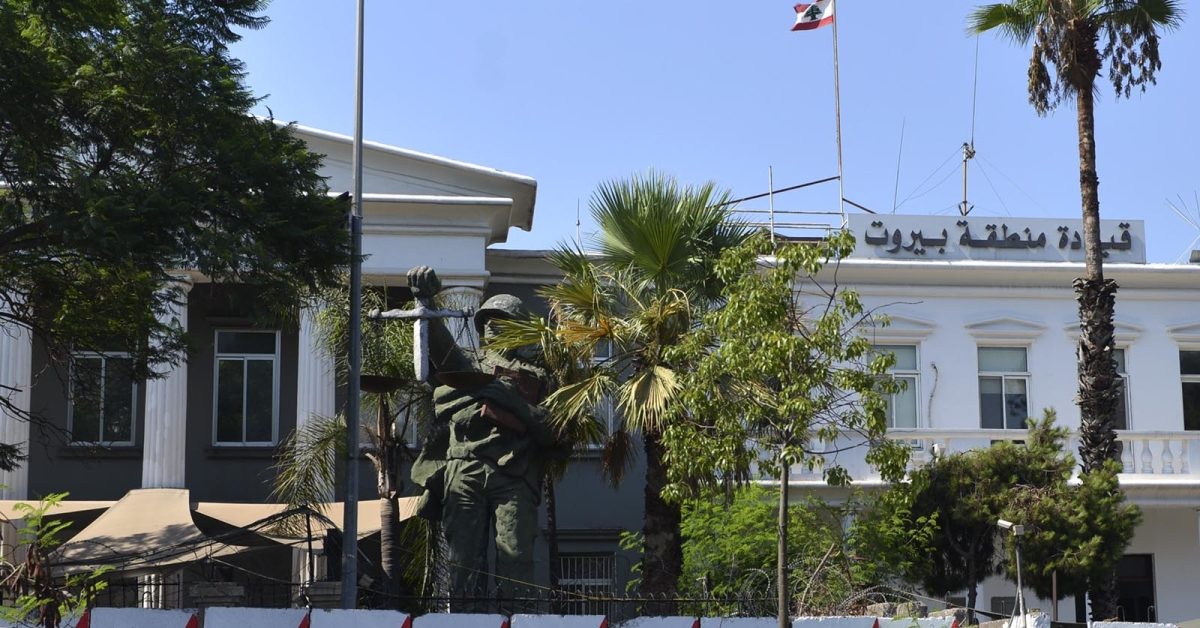
- Al-Hajjar visited the Beirut Police Unit Command and met Internal Security Forces chief Maj. Gen. Raed Abdallah. He then announced reinforced patrols and more investigative and intelligence work, coordinated with the army, against robbery and snatching.
- The column credits him with refusing to portray the security situation as out of control while still admitting that crimes need serious treatment.
- It adds that the police need political backing and must stay above polarization.
Why it matters: Visible street security and checkpoint work are one of the few state functions citizens can test daily, and the interior minister's public posture is shaping that trust. Beirut condemns Houthi missile launch at RiyadhLebanon's Foreign Ministry publicly sided with Saudi Arabia after the Houthis, the Yemeni armed group, fired two ballistic missiles toward Riyadh. The statement is short, but it signals where Beirut wants to stand with its Gulf partners. - The Ministry of Foreign Affairs and Emigrants condemned in the strongest terms the Houthi attacks on Saudi Arabia, the latest being two ballistic missiles launched toward the capital.
- It said targeting vital and civilian installations is a flagrant violation of international law.
- The ministry reaffirmed Lebanon's full solidarity with the Kingdom and said it stands by Riyadh against anything targeting its security, stability and territorial integrity, according to Lebanon 24.
The bigger picture: Lebanon is publicly backing Riyadh while it tries to keep the Gulf engaged and out of regional wars it did not choose. |
|
as of 3:28 AM GMT · Source: Polymarket |
"Eza ana amira w enta amir, meen bi sou2 el 7ameer?" criticizes: Scroll to the bottom for the answer — or play all 10 at sobhiye.news/games/trivia |
| | - The inside-job robbery: Al-Modon reports a Lebanese Army driver and four acquaintances staged a fake armed robbery in Beirut, making off with $520,000 meant for his captain. Investigators spotted inconsistencies in his account. About $120,000 was found hidden at his mother's home.
- Lights out, round one: Electricité du Liban's cuts to unpaid public offices, which began November 2, are now hitting Sidon's water pumps and 17 Ogero telecom centrals on generators. The Palace of Justice, the presidencies and security agencies are deferred to a second round.
- The brevet bill: The draft 2027 budget would raise the Brevet exam fee to 2 million LBP (about $22) and the identity card fee to 1 million LBP. Lebanon 24 contrasts that with beach-occupation revenues, estimated at roughly $10 million a year versus a real value of at least $120 million.
- Six days out of school: The Contract Teachers' Movement, which represents teachers hired on short-term contracts, says more than 50,000 public secondary students have missed six days of class. It urges parliament's Education Committee to push the minister to reconsider the decisions that triggered the strike.
- Bkerke's peace plea: Maronite Patriarch Bechara al-al-Rahi, preaching Sunday in Bkerke, called for "stable peace, not a prisoner of the possibility of war" and urged keeping the Dahr al-Baydar explosives case free of political instrumentalization. He also flagged the power cuts, saying citizens pay for poor regulation.
|
|
| ─ | Parallel Rate | 89,600 LBP | 0.00% | | ─ | Official Rate | 89,500 LBP | 0.00% | | ▲ | Gold | $4,125.1 | +1.23% | | ▼ | Bitcoin | $74,971 | -1.11% | | ▼ | S&P 500 | 7,376.86 | -4.05% |
as of 3:15 AM GMT · Source: lbprate, BDL, Yahoo Finance, CoinGecko |
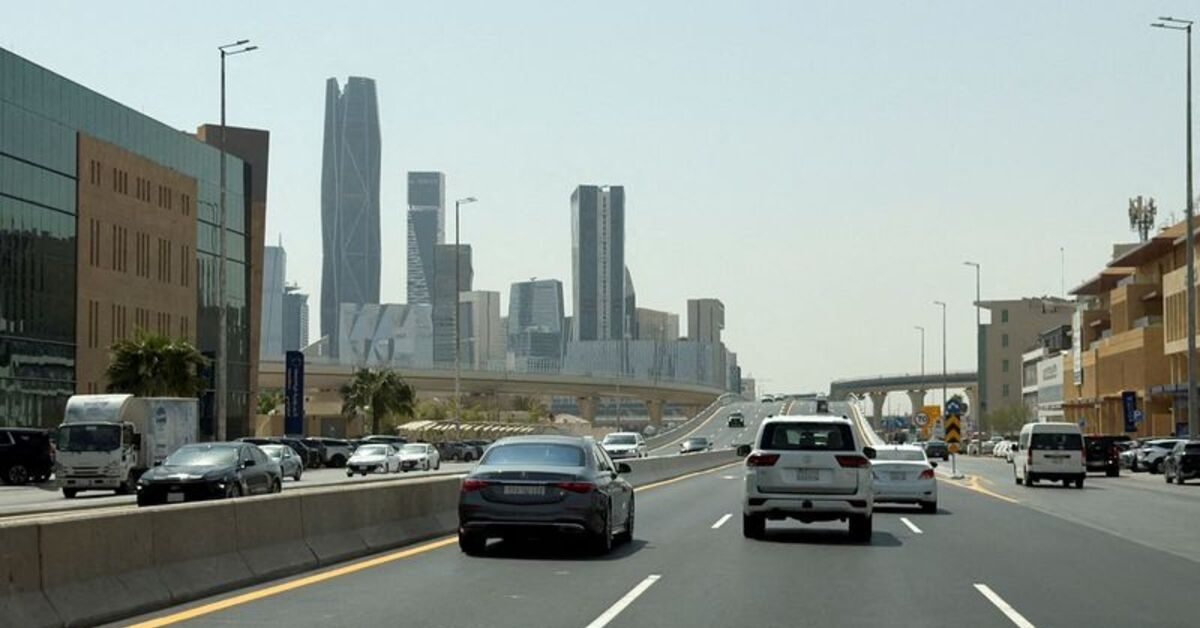
| | Houthi Missile Debris Blows Out Windows at Aramco Tower in RiyadhSaudi Arabia's capital took another direct hit from Yemen's Houthis on Sunday. The Houthis are an Iran-aligned armed movement that controls much of northern Yemen and has long fought a Saudi-led coalition backing Yemen's internationally recognised government. Debris from an attempted attack blew out windows across several floors of the Aramco Tower, the Saudi oil giant's corporate office in Riyadh's financial district. Reuters reports the Houthis have opened what amounts to another front in the wider US-Israeli war with Iran. - The energy ministry said damage was limited, with no injuries or deaths, and did not assign blame. The Houthis claimed responsibility.
- The Saudi-led coalition said its air defences intercepted Houthi missiles over Riyadh and a separate missile over the Eastern Province, where most of the kingdom's oil and gas lies. It said it also destroyed ballistic missile launchers in Saada and Sanaa.
- The renewed fighting intensified after the Houthis advanced in September toward the Bab el-Mandeb Strait, a key shipping chokepoint. Since then they have stepped up missile and drone attacks on Saudi ports and airports. An October strike on Riyadh's airport killed 13 people and wounded more than 300.
- Yemen's Houthi-run health ministry said at least 40 people died in Saudi air strikes near Sanaa. Saudi authorities said they were investigating.
- Many Saudi schools returned to in-person classes Sunday after weeks of home learning.
What to watch: Riyadh is courting both military help abroad and talks with Tehran, so the next strikes will test whether either track slows the escalation. Iraq's Khor Mor gas field goes dark after drone strikeA drone hit the LPG storage tank at Khor Mor, one of the largest gas fields in Iraq's Kurdistan region, halting production on Sunday. The field supplies gas for regional power generation, so the outage shows up quickly in the electricity supply. Nobody has claimed the attack, which lands as Iraq struggles with the fallout of the wider US-Iran confrontation. - Two electricity ministry sources told Reuters a single drone caused a fire at the storage tank that was still burning. Staff were moved to shelters inside the facility.
- The region's electricity ministry said 2.8 gigawatts of generation was lost.
- Iraqi Prime Minister Ali al-Zaidi said initial assessments showed no casualties. The region's natural resources and electricity ministries called it a "terrorist attack" and said they were working to limit its impact.
- Joint operator Dana Gas had already shut the main facilities in July over credible security threats before restarting later that month.
- Baghdad is trying to balance ties with Iran and the US. Tehran has struck Iranian Kurdish opposition groups in northern Iraq, and Iran-backed militants in Iraq earlier attacked Gulf neighbours.
Why it matters: Kurdistan's power grid leans on this one field, and Iraq is also among the countries hit hardest by Iran's effective closure of the Strait of Hormuz. Two trains collide south of Cairo, killing 7A passenger train from Giza to Fayoum crashed into the rear of another service heading south from Cairo to Aswan on Sunday, in Giza's Al-Ayyat area. Seven people died and more than 100 were hurt, the health ministry said. President Abdel Fattah el-Sisi ordered an urgent investigation. The same area saw Egypt's worst-ever rail disaster, and the crash revives questions about the country's ageing network. - The health ministry said 112 people were injured, with injuries ranging from bruises to fractures of the limbs, pelvis and vertebrae, and head and chest wounds. 45 had been discharged by the evening.
- Witnesses told AFP that six carriages overturned around 1:30 pm. Villagers and railway workers dug beneath a carriage to reach trapped passengers, according to Al-Monitor.
- Sisi said anyone found negligent would be held to account.
- In 2002, a fire on a train carrying holiday travellers south of Cairo killed more than 370 people. Multiple crashes in the same area killed dozens in 2009.
- Egypt has poured billions into new highways and high-speed rail, but much of its older network has yet to be overhauled.
Zooming out: Egypt's rail network, one of Africa's largest, serves 110 million people, so failures on its ageing lines reach a very wide public. |
|
| | - Batroun's newest street sign: Batroun's municipal council voted unanimously to name a street in the old souks after actor and playwright Georges Khabbaz, who turns 50 this year. It's the lane he walked to school and where Ghadi was filmed. He wept when the mayor announced it at the Beirut Shorts festival.
- 30 tournaments, one federation: Lebanon's e-sports scene now hosts more than 30 annual tournaments, five years after the Lebanese Federation for E-Sports and Robotics was founded. Players have won prizes above $10,000, and the national e-football team climbed 16 places to 21st worldwide.
- Fadel Chaker's comeback sound: Arranger Houssam Al Saabi, who worked on Chaker's song "Nam Al-Layl", says he'd be honored if his arrangements echoed the Rahbani brothers. He also teased an album, "Hulm Jadid", with styles Chaker has never sung, and called working with Fairuz a dream.
- Elvis versus the algorithm: Elvis Presley's rights holders have sued AI music firm Suno, claiming it let users clone his voice. It tests Tennessee's ELVIS Act, a 2024 law protecting musicians' voice and likeness. Suno says it blocks prompts using artist names.
|
|
That's your Monday briefing; next time someone asks "what's new in Lebanon?", you've got answers. |
If everyone claims importance, nothing functions. |
Lebanon news, every weekday morning. Free, sharp, ~5 minutes. |
|
|
|
|