|   | Yalla, because three stories are pulling at once: Washington's UNIFIL replacement plan landed in Beirut with Mike Waltz, the army hauled a million Captagon pills out of Baalbek, and the Times says Israel went hunting Iranian generals for answers on Ron Arad. Settle in with the coffee. |
|
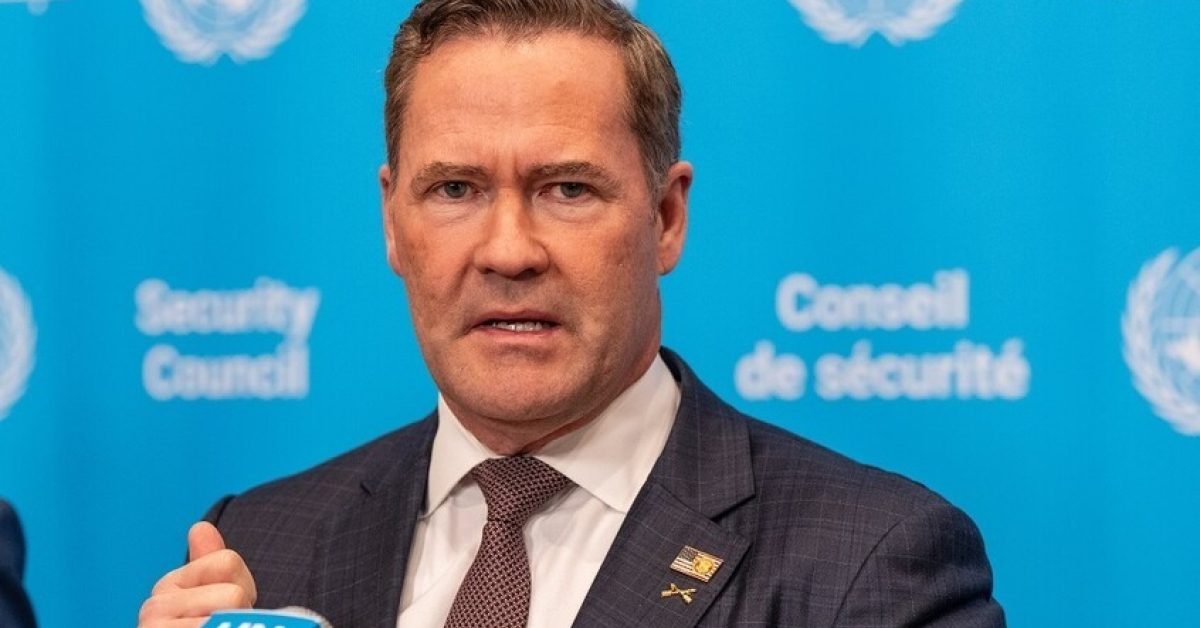
| | Waltz Arrives as Beirut Braces for Washington's UNIFIL PlansUS Ambassador to the UN Mike Waltz is in Beirut to discuss what replaces UNIFIL, the UN peacekeeping force whose mandate ends December 31, 2026. As we've reported, Washington wants the "Framework Agreement" with Israel to replace Resolution 1701, the 2006 ceasefire resolution that France still treats as the baseline. Speaker Berri has now said no to sending it to the Security Council as written. - According to Al Modon, Berri told President Aoun the agreement cannot go to the Security Council in its current form. He is wary of Article 12, which sets up joint Lebanon-Israel committees, and so is at least one other party.
- One scenario circulating is a limited multinational force plus observers outside the UN framework to separate the two armies. It hasn't been presented to Berri yet.
- Washington and Paris are drafting a joint vision, with options ranging from a multinational force to a civilian monitoring mechanism. They split on the base text, with the US backing the Framework Agreement and France holding to 1701.
- Aoun and PM Nawaf Salam both want a Security Council mandate and no security vacuum in the south. They reject direct military coordination with Israel.
- Hezbollah is still listening to an Italian proposal for a UNIFIL-style force. Anything that mediates between the Lebanese and Israeli armies is a no for the party.
What to watch: A Russia-China-US leaders' meeting in Shenzhen on November 19 could shape whether a veto stands in the way of any new Security Council resolution on Lebanon. Army Raid in Baalbek Nets One Million Captagon PillsThe army raided the Shrawneh area near Baalbek to arrest a man it calls one of the country's most dangerous wanted individuals, identified only as F.J. As we reported in October and again last week, the army has been grinding through the Bekaa's drug trade, including a 60-ton hashish destruction in Hermel and a 200-ton cannabis burn. This raid targets a person, not a field. - An army patrol came under fire during the operation. Soldiers returned fire and F.J. was moderately wounded, then taken to a hospital.
- The army says he is wanted on a large number of warrants for shooting at an army patrol and at civilians, inciting unrest and drug trafficking.
- Two Lebanese and two Syrians were also arrested.
- Seized: missiles, weapons, ammunition, about 1 million Captagon pills (an illegal amphetamine-type stimulant), 18 kg of other narcotics and several cars.
Why it matters: Weapons, rockets and an exchange of fire alongside the drugs show the army moving against a single armed figure, not just destroying crops in the Bekaa. Israel Kidnapped Iranian Generals Hunting for Missing Airman Ron AradThe New York Times reports that Israel kidnapped Iranian commanders to find Ron Arad, an Israeli airman missing since 1986. Arad became a national symbol of Israel's promise to bring its soldiers home. Israeli officials were convinced Tehran was behind his disappearance, and other theories got little attention. - The Times says Israeli officers posing as movers grabbed Gen. Abdullah Saberi of Iran's Revolutionary Guards while he jogged in a Damascus diplomatic quarter in September 2021.
- He was drugged, hooded with a refrigerator box, driven off in a van and taken to Israel for interrogation, according to Middle Eastern officials and Iranian officials close to him.
- His interrogators reportedly cared about one question: what did he know about Ron Arad?
The bigger picture: Arad, an Israeli airman, is still the only Israeli service member the military lists as missing in action, and the Times says his case led Israel to risk an abduction in the shadow of Iran's own embassy. |
|
as of 3:39 AM GMT · Source: Polymarket |
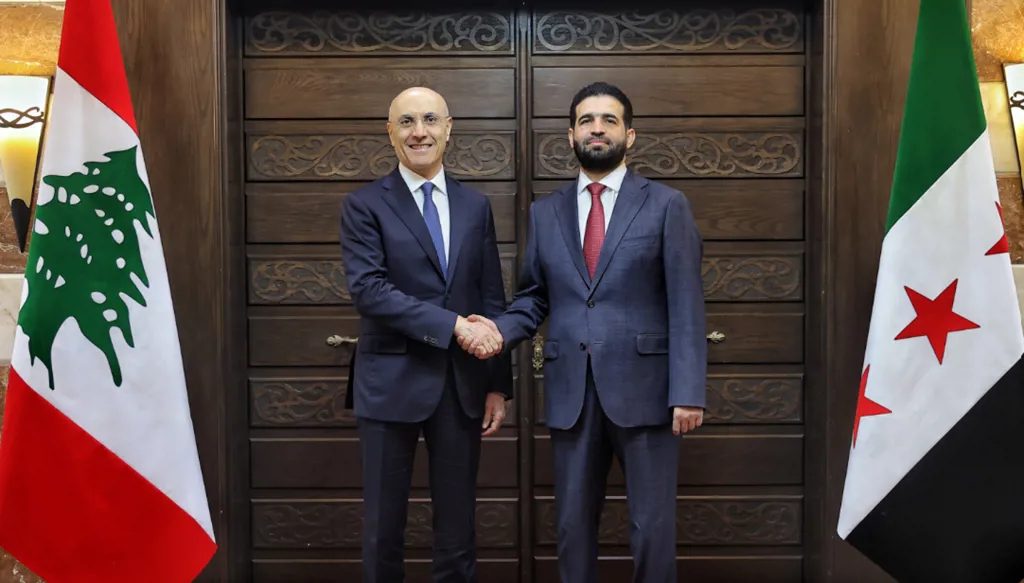
| | - Interior ministers shake hands: Lebanon's Ahmad Al-Hajjar met Syria's Anas Khattab in Damascus, their first official meeting. Annahar reports the agenda covered Syrian detainees in Lebanon, civil-status paperwork for Syrians, wanted persons, border crossings and movement between the two countries.
- Twinning Tripoli with Istanbul: In Akkar, Bilal Erdoğan, the Turkish president's son, floated pairing the two cities to revive trade. He tied Turkey's stability to peace in Lebanon and Syria, called the Mecca defense pact protective of the region, and later met PM Salam.
- Hammer and anvil: At the Arab Justice Ministers' council in Algeria, Adel Nassar described Lebanon as caught between "Israel's hammer and Iran's anvil." Lebanon was unanimously elected to the council's Executive Bureau for two years, and he renewed the state-weapons pledge.
- Raji's Gulf homecoming: Foreign Minister Youssef Rajji told Lebanese in Abu Dhabi that "Lebanon is back in the Gulf, and the Foreign Ministry is back to being Lebanese." He argued investors won't return while the war-and-peace decision sits outside constitutional institutions.
- Scapegoat or accountability: Antoine Menassa, founder of the Lebanese-French Business Council, argues that blaming Riad Salameh alone ignores the state's borrowing and skipped reforms. He notes the IMF's mission ended November 13 with progress but no final bank-restructuring deal.
|
|
| ─ | Parallel Rate | 89,250 LBP | 0.00% | | ─ | Official Rate | 89,500 LBP | 0.00% | | ▼ | Gold | $3,872.7 | -0.35% | | ▼ | Bitcoin | $65,083 | -0.18% | | ▼ | S&P 500 | 7,561.67 | -0.76% |
as of 3:24 AM GMT · Source: lbprate, BDL, Yahoo Finance, CoinGecko |
| | The World's Top Court Rules on Myanmar's Treatment of the RohingyaThe International Court of Justice (the UN's top court, based in The Hague) will rule Thursday on whether Myanmar committed genocide against its Rohingya minority, a Muslim minority from Myanmar's western Rakhine state. The ICJ has never found a state responsible for genocide, a crime defined after the Holocaust. The case follows a 2017 military campaign that drove hundreds of thousands of Rohingya into Bangladesh, and it was brought by The Gambia, a Muslim-majority state, not by the victims themselves. That is why the ruling is being treated as a landmark test of the 1948 UN genocide convention. - Judges have weighed The Gambia's accusations for seven years. The crux is proving "intent to destroy" a group in whole or in part, which is what separates genocide from other atrocities.
- Myanmar denies genocide and says it was fighting a military uprising by insurgents. For decades the Rohingya have been stripped of citizenship and targeted by discrimination.
- Closed-door hearings in January heard directly from survivors who travelled from Bangladeshi camps.
- More than 1 million Rohingya remain in Bangladesh, in the world's largest refugee settlement. Fewer than 600,000 are estimated to remain in Myanmar.
The bigger picture: Observers say the ruling offers the strongest hint yet of how judges might approach South Africa's separate genocide case against Israel, which also concerns a powerful military and a targeted population. Israel Says It Killed a Senior Hamas Commander in GazaAn Israeli airstrike in Al-Mawasi, a crowded displacement area in southern Gaza, killed Samir Abu Younis, the newly named commander of Hamas's Rafah Brigade. Israel says he helped plan the October 7, 2023 attack that triggered the Gaza war. The strike came a year into a ceasefire that has not stopped Israeli strikes, and it lands as aid deliveries and flooded camps draw fresh scrutiny of that same deal. - Hamas's Al-Qassam Brigades (its armed wing) confirmed his death and called it a "cowardly assassination." He was 53 and had held the post since September 15.
- Eyewitnesses said four missiles hit a tent in a camp sheltering hundreds of displaced people. The Israeli military says steps were taken to reduce harm to civilians, according to BBC.
- Gaza's health ministry says 1,643 people have been killed since the October 2025 ceasefire. Israel argues the deal lets it keep striking remaining militants.
- Israeli military data obtained by Haaretz shows Israel allowed in about half the 4,200 trucks a week it pledged. Cogat, the Israeli military body overseeing aid, calls the data inaccurate.
- Flooding may have affected about 226,000 people, according to the UN.
Why it matters: The same ceasefire is being cited by Israel to justify targeted strikes and by Palestinians and aid groups to demand more supplies, so each side reads it differently. Iran Talks Up the Bomb as IAEA Meeting NearsA senior Iranian lawmaker said Saturday that building a nuclear bomb has become a "public demand," days before the board of the International Atomic Energy Agency (IAEA, the UN's nuclear watchdog) meets to discuss Iran. Inspectors have not returned to sites the US and Israel bombed in June 2025. Iran says it has made no official change to its nuclear doctrine and has not suspended its safeguards obligations. - Hossein-Ali Haji-Deligani, deputy head of parliament's Article 90 Commission (which handles complaints about the government's performance), said Iran must have the capability "whether it is used or not." He spoke to Fars news agency.
- The IAEA says it cannot rule out diversion of nuclear material and has lost track of Iran's stockpiles since the attacks.
- Before those attacks, the IAEA estimated Iran held 440.9 kg of uranium enriched up to 60%. That is a short step from weapons grade and enough, if enriched further, for 10 weapons.
- Iran's Assembly of Experts called for reviewing withdrawal from the Non-Proliferation Treaty, the pact that bars non-nuclear states from building weapons.
- Separately, France blames an IRGC (Iran's Revolutionary Guards) cyber unit for an October 11-12 attack on refrigeration systems at 700-plus stores. The IRGC called it an Israeli "false flag."
What to watch: The IAEA board meeting this week will test whether the Assembly of Experts' NPT-withdrawal call and Iran's refusal to restart inspections harden into formal positions. |
|
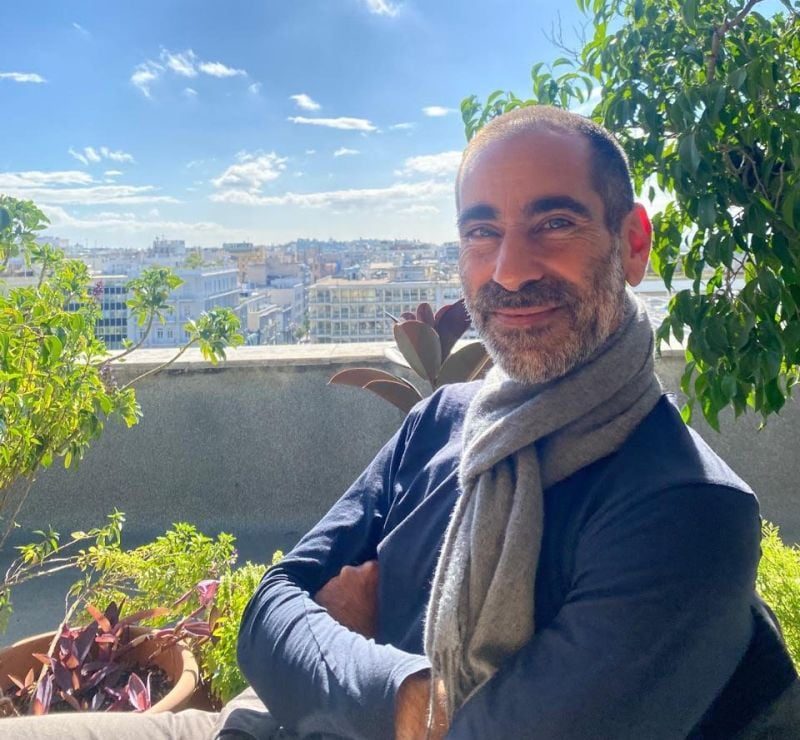
| | - Jazz comes home: Karim Ghattas, founder of Liban Jazz (set up in 2004), is back with "Beirut," a concert series taking artists into venues across the capital. He also wants to bring them to other capitals, where contacts might give careers momentum or, as he puts it, keep them dreaming.
- Andreeva takes the crown: Mirra Andreeva, 19, beat Elina Svitolina 7-5, 6-3 to win the WTA Finals at Indian Wells without dropping a set. She rises to No 2 and won a Mercedes, though she admitted she still has no driving licence.
- Beirut architect, global stages: Roula Salamoun founded her multidisciplinary Beirut studio in 2017, working across architecture, interiors, furniture and installations. After studying at AUB and Columbia, her work has appeared at Downtown Design Dubai, London Art Week and PAD Paris.
- Cassava gets its moment: The New Yorker reviews Iara, a new Amazonian-Brazilian restaurant in New York from chef Vitor Mendes, where cassava turns up in broth, hot sauce, cocktails and cake. The review praises its dry-aged tilefish and open-kitchen chef's counter.
|
|
That's your lot: go pick a song for the commute and let it play to the end. |
Garlic and oil emulsify, making "toum" fluffy. |
Lebanon news, every weekday morning. Free, sharp, ~5 minutes. |
|
|
|
|